• Development and function of locomotor circuits in Drosophila
    Stanford bio-X Frontiers in Interdisciplinary Biosciences Seminar

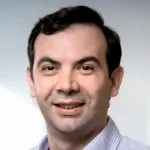
    CHRIS DOE, UNIVERSITY OF OREGON

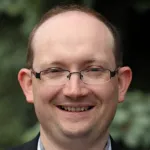
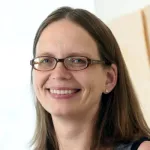
    Dr. Doe and his lab group study the assembly of the nervous system in the fruit fly Drosophila. They are interested in how neuronal diversity is generated, how it is used to establish neuronal circuits, and how circuits generate diverse locomotor behaviors.
    May 02, 2019 4:00 PM to 5:00 PM
    Clark Center Seminar Room S360
    James H. Clark Center 318 Campus Drive West, Stanford, CA 94305
  • Frontiers in Quantitative Biology Seminar

    Frontiers in Quantitative Biology Seminar

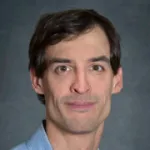
    PAUL FRANÇOIS, MCGILL UNIVERSITY

    The François lab is interested in the theoretical aspects of evolution, real and simulated. They have developed tools to evolve models of "gene networks" in silico, performing predefined biological functions. They have applied and predicted structure of networks for systems ranging from genetic oscillators, biochemical adaptation to development and immune system.

    May 02, 2019 10:00 AM
    Munzer Auditorium
    Beckman Center, 279 Campus Drive West, Stanford, CA 94305
  • Stanford Bio-X Frontiers in Interdisciplinary Biosciences Pre-Seminar

    Stanford Bio-X Frontiers in Interdisciplinary Biosciences Pre-Seminar

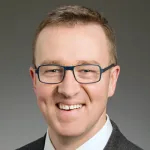
    JULIA KALTSCHMIDT, DEPARTMENT OF NEUROSURGERY

    Attend Dr. Kaltschmidt's pre-seminar presentation to learn more about Dr. Chris Doe's seminar, "Development and function of a celestial navigation circuit in Drosophila", to be held Thursday, May 2nd.

    April 30, 2019 4:00 PM to 5:00 PM
    Clark Center Seminar Room S361
    James H. Clark Center 318 Campus Drive West, Stanford, CA 94305
  • Frontiers in Quantitative Biology Seminar

    Frontiers in Quantitative Biology Seminar

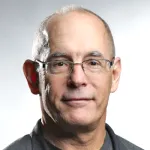
    SALLY HORNE-BADOVINAC, UNIVERSITY OF CHICAGO

    The Horne-Badovinac lab uses genetic, cell biological and quantitative live imaging approaches to investigate how organs take on their unique shapes during development. Currently, they seek to understand how collective cell migration and basement membrane remodeling shape the fly egg.

    April 25, 2019 10:00 AM
    Munzer Auditorium
    Beckman Center, 279 Campus Drive West, Stanford, CA 94305
  • Full-length alternative transcript isoform analysis using long-read nanopore sequencing

    Stanford bio-X Frontiers in Interdisciplinary Biosciences Seminar

    ANGELA BROOKS, UNIVERSITY OF CALIFORNIA, SANTA CRUZ

    Dr. Brooks's laboratory focuses on the study of somatic mutations that cause changes to the transcriptome, particularly through mRNA splicing. They aim to gain a better understanding of how alternative splicing is regulated and the functional consequences of splicing dysregulation through the study of these cancer genome alterations.

    April 11, 2019 4:00 PM to 5:00 PM
    Clark Center Seminar Room S360
    James H. Clark Center 318 Campus Drive West, Stanford, CA 94305
  • Frontiers in Quantitative Biology Seminar

    Frontiers in Quantitative Biology Seminar

    HESPER REGO, YALE UNIVERSITY

    The Rego lab studies the role that metabolic variability plays in the survival of Mycobacterium tuberculosis, the microbe that causes tuberculosis.

    April 11, 2019 10:00 AM
    Munzer Auditorium
    Beckman Center, 279 Campus Drive West, Stanford, CA 94305
  • Stanford Bio-X Frontiers in Interdisciplinary Biosciences Pre-Seminar

    Stanford Bio-X Frontiers in Interdisciplinary Biosciences Pre-Seminar

    AMI BHATT, DEPARTMENTS OF MEDICINE (HEMATOLOGY) AND GENETICS

    Attend Dr. Bhatt's pre-seminar presentation to learn more about Dr. Angela Brooks's seminar, "Full-length alternative transcript isoform analysis using long-read nanopore sequencing", to be held Thursday, April 11th.

    April 09, 2019 4:00 PM to 5:00 PM
    Clark Center Seminar Room S361
    James H. Clark Center 318 Campus Drive West, Stanford, CA 94305
  • Frontiers in Quantitative Biology Seminar

    Frontiers in Quantitative Biology Seminar

    STEFANO DI TALIA, DUKE UNIVERSITY

    The Di Talia laboratory develops live imaging and computational methods to probe the dynamics of the signaling pathways that control cell division during development and regeneration. They aim to uncover the dynamical principles that ensure that embryonic development and regeneration are regulated in a reliable manner.

    March 28, 2019 10:00 AM
    Munzer Auditorium
    Beckman Center, 279 Campus Drive West, Stanford, CA 94305
  • Frontiers in Quantitative Biology Seminar

    Frontiers in Quantitative Biology Seminar

    ADAM DEUTSCHBAUER, LAWRENCE BERKELEY NATIONAL LABORATORY

    Adam Deutschbauer has a background in Microbial systems biology. As part of the Virtual Institute of Microbial Stress and Survival, he develops next-generation tools for microbial functional genomics. As the Biotechnology Component Deputy Director, he helps drive the development of experimental and computational approaches to develop models of microbial metabolism, gene regulation, and signal transduction.

    March 14, 2019 10:00 AM
    Munzer Auditorium
    Beckman Center, 279 Campus Drive West, Stanford, CA 94305
  • Towards building tissues: engineering complexity through biomaterial design

    Stanford bio-X Frontiers in Interdisciplinary Biosciences Seminar

    BRENDAN HARLEY, UNIVERSITY OF ILLINOIS

    Dr. Harley's group develops biomaterials that replicate the dynamic, spatially-patterned, and heterogeneous microenvironment found in the tissues and organs of our body. They use this approach to generate new insight regarding how biomaterial cues can instruct cell responses in the context of development, disease, and regeneration. In this talk, Dr. Harley will describe a collagen biomaterial under development to address barriers preventing regeneration of musculoskeletal tissues such as orthopedic insertions and craniomaxillofacial bones.

    March 07, 2019 4:00 PM to 5:00 PM
    Clark Center Seminar Room S360
    James H. Clark Center 318 Campus Drive West, Stanford, CA 94305

Pages