Interdisciplinary Initiatives Program Round 13 - 2026
Project Investigators:
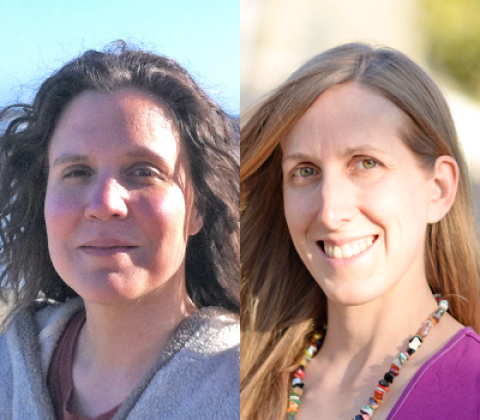
Ashby Morrison, Biology
Jennifer Dionne, Materials Science & Engineering
Abstract:
Exposure to environmental carcinogens is an unavoidable and persistent threat to human health. The most ubiquitous carcinogen in our natural environment is ultraviolet (UV) radiation in sunlight, which causes skin cancer, the most common form of human malignancy in the U.S. For example, each year, there are more new cases of skin cancer than breast, prostate, lung, and colon cancers combined. Moreover, during the course of their lifetimes, one in five Americans will develop skin cancer. While it is known that UV-induced damage is the primary cause of the vast majority of skin cancers, it remains unknown how the genome's three-dimensional (3D) organization in the mammalian nucleus governs the transmission of UV radiation that damages DNA. Using an interdisciplinary approach that integrates expertise in both photophysics and molecular genomics, we will determine how genome architecture regulates UV transmission into the nucleus. Collectively, we expect this study to reveal new genome-stability pathways that control carcinogen-induced DNA damage and impact cancer and aging-related diseases.