-
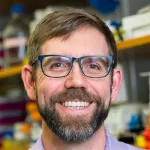
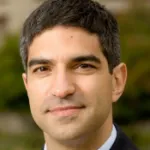
Bio-X Affiliated FacultyDr. Eisenberg's research efforts include surgical innovation, epidemiologic studies, and basic science discoveries to improve the treatments, outcomes, and lives of infertile men. -
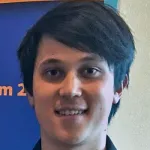
Michael Fanton - Bio-X Travel Awardee
Awarded in 2019Home Department: Mechanical Engineering
Faculty Advisor: David Camarillo
Talk Title: Optimizing padding thickness in football helmets to minimize angular acceleration
Event: CMBBE 2019
Awarded in 2018
Talk Title: Constant force shock absorbers for preventing traumatic brain injury
Event: 8th World Congress of Biomechanics
Awarded in 2017
Talk Title: The Effect Of Neck Musculature On Brain Tissue Strain In High-speed Sagittal Impacts
Event: 2017 Biomedical Engineering Society Annual Meeting
Awarded in 2016
Talk Title: Investigation of Football Head Impacts Through Development of a Dynamic Model”
Event: Biomedical Engineering Society 2016 Annual Meeting -
Michael Fischbach - Liu (Liao) Family Professor
Bio-X Affiliated FacultyDr. Fischbach's laboratory uses a combination of genomics and chemistry to identify and characterize small molecules from microbes, with an emphasis on the human microbiome. -
Michael Fredericson - Professor of Orthopaedic Surgery and (by courtesy) of Medicine (Stanford Prevention Research Center)
Bio-X Affiliated FacultyDr. Michael Fredericson is the first physician promoted to Professor of Physical Medicine & Rehabilitation (PM&R) at Stanford University and is currently Director of PM&R Sports Medicine in the Department of Orthopaedic Surgery, Co-Director of the Stanford Longevity Center, and Founder of Lifestyle Medicine. He is also the Head Team Physician for the Stanford Track & Field and Swimming Teams and a Wu Tsai Human Performance Alliance member.
-
Michael Greicius - Iqbal Farrukh & Asad Jamal Professor and Professor, by courtesy, of Psychiatry & Behavioral Sciences (Administrative & Academic Special Programs)
Bio-X Affiliated FacultyDr. Michael Greicius's research focuses on elucidating the neurobiologic underpinnings of AD. His lab combines cutting edge brain imaging, "deep" phenotyping, and whole-genome sequencing of human subjects to identify novel pathways involved in AD pathogenesis. -
Michael Howitt - Assistant Professor of Pathology (Research)
Bio-X Affiliated FacultyThe Howitt lab seeks to understand how interactions between intestinal epithelial cells and the gut microbiota can contribute to both health and disease. -
Michael Iorga - Bio-X Undergraduate Fellow
2013 Undergraduate Summer Research Program ParticipantHome Department: Biomechanical Engineering
Supported by: VPUE and Bio-X
Mentor: Josef Parvizi, Associate Professor of Neurology & Neurosciences -
Michael J. Rosen - Stanford University Endowed Professor for Pediatric IBD & Celiac Disease
Bio-X Affiliated FacultyDr. Michael Rosen is a pediatric gastroenterologist and physician scientist, who has been devoted to inflammatory bowel disease (IBD) research since beginning medical training over 20 years ago. He is also Director of the Stanford Center for Pediatric IBD and Celiac Disease. Dr. Rosen has expertise crossing mucosal immunology and epithelial biology, formal training and experience in clinical and translational investigation with human biospecimens, and direct insight regarding the important clinical challenges caring for children with complicated IBD.
-
Michael James - Bio-X Undergraduate Fellow
2023 Undergraduate Summer Research Program ParticipantHome Department: Physics
Mentors: Jill Helms (Surgery - Plastic & Reconstructive Surgery) and Katrin Andreasson (Neurology & Neurological Sciences) -
Michael Jewett - Professor of Bioengineering
Bio-X Affiliated FacultyDr. Michael Jewett is a Professor of Bioengineering at Stanford University. He received his B.S. from UCLA and PhD from Stanford University, both in Chemical Engineering. He completed postdoctoral studies at the Center for Microbial Biotechnology in Denmark and the Harvard Medical School. Jewett was also a guest professor at the Swiss Federal Institute of Technology (ETH Zurich). His research group focuses on advancing synthetic biology research to support planet and societal health, with applications in medicine, manufacturing, sustainability, and education.