Interdisciplinary Initiatives Program Round 13 - 2026
Project Investigators:
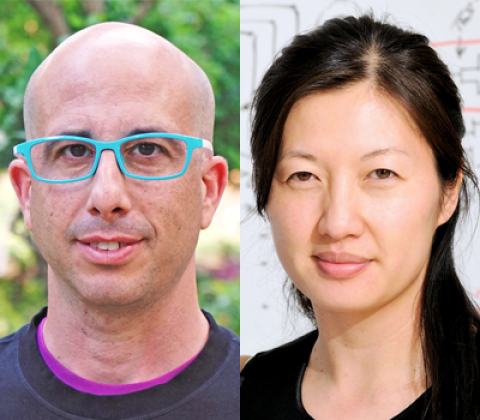
Aaron Gitler, Genetics
Alice Ting, Genetics and Biology
Abstract:
Amyotrophic lateral sclerosis (ALS) and frontotemporal dementia (FTD) are two devastating, incurable neurodegenerative diseases driven by dysfunction of the RNA-binding protein TDP-43. When TDP-43 is lost from the nucleus of nerve cells, many RNA processing defects occur, including in a critical neuronal transcript called UNC13A, which gets incorrectly processed (“spliced”), preventing production of the encoded protein essential for neurons to communicate with each other and with muscles. Importantly, genetic mutations in the UNC13A gene increase a person’s risk of developing ALS and are linked to shorter survival due to enhanced mis-splicing. However, beyond TDP-43, we still do not know exactly which other proteins regulate these harmful splicing events, largely because existing technologies cannot accurately identify proteins interacting with a specific RNA inside living cells. Our project brings together a geneticist with expertise in neurodegenerative disease with a chemist who has pioneered protein labeling technologies. We introduce a new technology, RPEX (RNA-stabilized peroxidase), that enables precise identification of proteins near an RNA in living cells. RPEX is rapidly destroyed in cells unless it binds to the target RNA. This ensures that labeling occurs only around the RNA of interest, providing precise “snapshots” of its surrounding protein environment. Using RPEX, we will map the proteins surrounding both the regular (“wild-type”) and the disease-associated mutants of UNC13A and test how these proteins influence its splicing. The impact of our project will be two-fold: establishing a transformative tool for studying RNA biology and uncovering new molecular drivers of a deadly human disease, ultimately revealing therapeutic targets to combat neurodegeneration.