Over 1,300 faculty are affiliated with Stanford Bio-X and are eligible to apply for our grants and be notified about fundraising opportunities, collaborations with industries, events, courses and available facilities and instruments. Learn how to become an affiliate!

Search Stanford Bio-X affiliated faculty

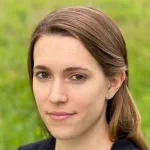
Headshot portrait of Susan E. Clark - Assistant Professor of Physics

Susan E. Clark - Assistant Professor of Physics

Bio-X Affiliated Faculty

Dr. Susan Clark is an astrophysicist, with primary research interests in cosmic magnetism and the physics of the interstellar medium. She is interested in interdisciplinary collaborations that spark new approaches to using heterogeneous data for physical discovery.

Dr. Clark's group is working on a diverse set of problems involving Galactic and extragalactic magnetism, 3D ISM structure, interstellar turbulence, star formation, and polarized cosmological foregrounds, among other topics.
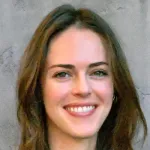
Headshot portrait of Monica Ellwood-Lowe - Assistant Professor of Education

Monica Ellwood-Lowe - Assistant Professor of Education

Bio-X Affiliated Faculty
Dr. Monica Ellwood-Lowe's lab studies children's language learning and brain development. They are particularly interested in how children develop in an unequal society, and the ways both children and their caregivers adapt to different structural constraints. To do this, they use a range of methods spanning day-long audio recordings of family environments, functional and structural MRI, eye-tracking, experience sampling approaches, and natural experiment designs.
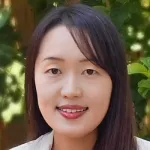
Headshot portrait of Bomi Lee - Assistant Professor of Pediatrics (Gastroenterology, Hepatology, & Nutrition)

Bomi Lee - Assistant Professor of Pediatrics (Gastroenterology, Hepatology, & Nutrition)

Bio-X Affiliated Faculty

Dr. Bomi Lee's lab is dedicated to unraveling the complexities of the immune microenvironment and its role in the pathogenesis of pancreatic diseases, such as pancreatitis and pancreatic cancer. By leveraging cutting-edge technology, innovative experimental and genetic animal models, as well as human specimens from donors, we aim to identify novel immune markers and potential therapeutic targets. Our goal is to advance the understanding of immune cells and their contributions to these diseases and to translate our findings into innovative treatments.

Headshot portrait of Fernando Alarid-Escudero - Assistant Professor of Health Policy

Fernando Alarid-Escudero - Assistant Professor of Health Policy

Bio-X Affiliated Faculty

Dr. Fernando Alarid-Escudero is an Assistant Professor of Health Policy at Stanford University School of Medicine. He obtained his Ph.D. in Health Decision Sciences from the University of Minnesota School of Public Health. His research focuses on developing statistical and decision-analytic models to identify optimal prevention, control, and treatment policies and conducting cost-effectiveness analyses to address a wide range of public health problems. He has also developed novel methods to quantify the value of future research. Dr.

Headshot portrait of Marc Lipsitch - Michael & Barbara Berberian Professor, Professor of Biology and Senior Fellow at the Freeman Spogli Institute for International Studies

Marc Lipsitch - Michael & Barbara Berberian Professor, Professor of Biology and Senior Fellow at the Freeman Spogli Institute for International Studies

Bio-X Affiliated Faculty, Clark Center Faculty

Dr. Marc Lipsitch started his appointments at Stanford on January 1, 2026. From 1999-2025 he was a faculty member at Harvard TH Chan School of Public Health, where he was Professor of Epidemiology (2006-2025) and founding Director of the Center for Communicable Disease Dynamics (2009-2025).

Headshot portrait of Christoph Thaiss - Assistant Professor of Pathology

Christoph Thaiss - Assistant Professor of Pathology

Bio-X Affiliated Faculty

Dr. Christoph A. Thaiss is an Assistant Professor of Pathology at Stanford University. His lab studies how interactions between environment, body, and brain impact physiology and disease over the lifespan. Christoph received his undergraduate training from the University of Bonn, Yale University, ETH Zurich, and the Broad Institute of MIT and Harvard. Following his Ph.D. studies at the Weizmann Institute of Science, he joined the faculty at the University of Pennsylvania.

Headshot portrait of Stephen M. Hinshaw - Assistant Professor (Research) of Molecular & Cellular Physiology

Stephen M. Hinshaw - Assistant Professor (Research) of Molecular & Cellular Physiology

Bio-X Affiliated Faculty

Dr. Stephen Hinshaw is an Assistant Professor in the Department of Molecular and Cellular Physiology and the Faculty co-Director of the Stanford Cryo-Electron Microscopy Center (cEMc). His laboratory develops and applies cutting-edge tools in chemical and structural biology to uncover fundamental cellular mechanisms and translate these insights into powerful new pharmacological strategies.

Headshot portrait - Timothy Durazzo - Professor of Psychiatry & Behavioral Sciences (Public Mental Health & Population Sciences)

Timothy Durazzo - Professor of Psychiatry & Behavioral Sciences (Public Mental Health & Population Sciences)

Bio-X Affiliated Faculty

The mission of Dr. Timothy Durazzo's BRASS lab is to better understand how the interplay between biomedical, psychological and social factors influence treatment outcome in Veterans and civilians seeking treatment for alcohol and substance use disorders. To accomplish this mission, the multidisciplinary team integrates information from advanced neuroimaging, neurocognitive assessment, psychodiagnostic and genotyping methods to identify the biopsychosocial factors associated with relapse and sustained sobriety.

Headshot portrait of Yu Zhang - Assistant Professor (Research) of Psychiatry & Behavioral Sciences (Public Mental Health & Population Sciences)

Yu Zhang - Assistant Professor (Research) of Psychiatry & Behavioral Sciences (Public Mental Health & Population Sciences)

Bio-X Affiliated Faculty

Dr. Yu Zhang's research operates at the intersection of AI, translational neuroscience, and precision medicine. His work focuses on unraveling the complex neurobiological mechanisms underlying cognitive deficits, behavioral dysfunctions, and therapeutic responses in mental health disorders. By integrating advanced machine learning techniques with multimodal brain imaging modalities (e.g., fMRI, DTI, EEG), Dr.

Pages