Welcome to Bio-X

Welcome to Bio-X

  • Support
  • Contact
  • About
    • Bio-X History
    • Contact Us
    • Clark Center
      • Map & Directions
      • Tours
      • Dining Options
    • Building Services
      • Room Scheduling
      • IT
      • General Facilities Issues
      • Urgent Facilities Issues
      • Non-Emergency Facilities Requests
      • Building Access Request
      • Lab Safety
      • Shared Equipment
    • FAQ
  • People
  • Research
    • Seed Grants
      • Browse Seed Grants
    • Visiting Scholars/Visiting Postdocs
    • PhD Fellows
    • Undergraduate Research
    • Ventures
      • Food@Stanford
      • NeuroVentures
    • Travel Awards
    • Research Partners
    • Browse Videos
    • Browse All Research
  • Highlights
    • Videos
      • Clark Center @ 10x Video
    • Bio-X in the News
  • Videos
    • USRP Faculty Talks
    • Symposium Lectures
    • Additional Videos
  • Events
    • Upcoming Events
    • Archive
    • USRP 2011 - New Imaging Techniques
    • Talk Videos
  • Get Involved
    • Faculty
    • Students
      • Courses & Workshops
    • Alumni & Friends
    • Corporations
      • Partnership Models
      • Benefits of Partnership
      • Corporate Member Projects
      • Corporate Forum Newsletter Archive
    • Browse Videos
    • Seminar Series
      • Stanford Bio-X Frontiers in Interdisciplinary Biosciences: 2019/2020
    • Support Bio-X
      • Stanford Bio-X White Paper
  1. Home
  2. Events

USRP 2011 - New Imaging Techniques

New Imaging Techniques
2011 USRP Talks - Wednesday, July 6, 2011

Events

  • Upcoming Events
  • Archive
  • USRP 2011 - New Imaging Techniques
  • Talk Videos

Courses and Workshops

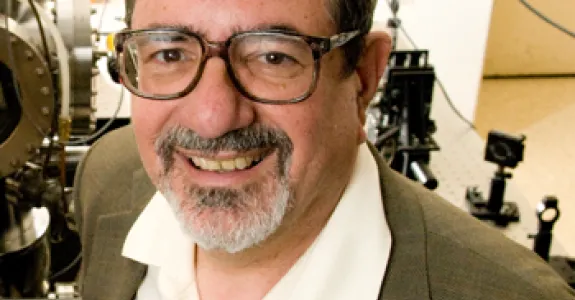
Headshot portrait of Richard Zare - Marguerite Blake Wilbur Professor in Natural Science and Professor of Chemistry and (by courtesy) of Physics

Richard Zare - Marguerite Blake Wilbur Professor in Natural Science and Professor of Chemistry and (by courtesy) of Physics

Seed Grant Committee Member, Scientific Leadership Council Member, Clark Center Faculty
Stanford Profile
Dr. Zare's Biosketch
Dr. Zare's Lab Homepage

A pioneer in the use of lasers to study chemical reactions at the molecular level, Marguerite Blake Wilbur Professor Richard N. Zare pursues diverse theoretical and experimental interests in physical chemistry and nanoscale chemical analysis. The Zarelab has made a broad impact in analytic chemistry with development of laser-induced fluorescence to study reaction dynamics, and seminal contributions to understanding of molecular collision processes. The group continues to invent tools and measurement techniques to study phenomena from reaction in microdroplets to drug delivery.

Related videos

USRP 2011 - Imaging Informatics: From Pixels to Biomedical Meaning

USRP 2016 - Dissecting motion processing pathways in fruit flies

USRP 2019 - Your Heart Counts

  • Show More

Stanford Bio-X Seed Grants

Protein Profiling to Predict Adverse Reactions from Radiation Therapy

Interdisciplinary Initiatives Program Round 2 – 2002
Novel Nanoparticles for Delivery of Small Molecules in Cancer Therapy

Interdisciplinary Initiatives Program Round 3 – 2006
Revealing mitochondrial enzyme regulation mechanisms arising from lysine acetylation

  Supported BioSTAR Sponsored Research Project - 2012
  • Show More

Other Stanford Bio-X Supported Research
Development of an electric-field-induced drug delivery system

  Supported Sponsored Research Project - 2011

Revealing mitochondrial enzyme regulation mechanisms arising from lysine acetylation

  Supported BioSTAR Sponsored Research Project - 2012

Research News

Photo of ocean waves crashing against a large rock and spraying.

‘Microlightning’ in water droplets may have sparked life on Earth

March 14, 2025 - Stanford Report
A study from Stanford Bio-X affiliated faculty member Dick Zare, with lead author Dr. Yifan Meng, shows...

Photo of a large industrial machine between two sections of many rows of bright green crops, spraying the ones closest to it with a white mist.

New device produces critical fertilizer ingredient from thin air, cutting carbon emissions

December 13, 2024 - Stanford Report
A new prototype device from Stanford Bio-X affiliated faculty member and Clark Center building resident faculty...
Photo of a person's hand holding a remote up towards a ventilation system.

Study details how low humidity could be a boon for viruses

March 12, 2024 - Stanford News
New Stanford research from Stanford Bio-X affiliated faculty member and Clark Center building resident faculty member...

  • Show More

Stanford Bio-X

James H. Clark Center, Stanford University 318 Campus Drive Stanford, CA 94305 contact-biox@stanford.edu
Follow @StanfordBioX

  • Contact
  • FAQ
  • Room Reservations
Stanford University
  • Stanford Home
  • Maps & Directions
  • Search Stanford
  • Emergency Info
  • Terms of Use
  • Privacy
  • Copyright
  • Trademark
  • Non-Discrimination
  • Accessibility

© Stanford University, Stanford, California 94305