Welcome to Bio-X

Welcome to Bio-X

  • Support
  • Contact
  • About
    • Bio-X History
    • Contact Us
    • Clark Center
      • Map & Directions
      • Tours
      • Dining Options
    • Building Services
      • Room Scheduling
      • IT
      • General Facilities Issues
      • Urgent Facilities Issues
      • Non-Emergency Facilities Requests
      • Building Access Request
      • Lab Safety
      • Shared Equipment
    • FAQ
  • People
  • Research
    • Seed Grants
      • Browse Seed Grants
    • Visiting Scholars/Visiting Postdocs
    • PhD Fellows
    • Undergraduate Research
    • Ventures
      • Food@Stanford
      • NeuroVentures
    • Travel Awards
    • Research Partners
    • Browse Videos
    • Browse All Research
  • Highlights
    • Videos
      • Clark Center @ 10x Video
    • Bio-X in the News
  • Videos
    • USRP Faculty Talks
    • Symposium Lectures
    • Additional Videos
  • Events
    • Upcoming Events
    • Archive
    • USRP 2016 - How hearing happens?
    • Talk Videos
  • Get Involved
    • Faculty
    • Students
      • Courses & Workshops
    • Alumni & Friends
    • Corporations
      • Partnership Models
      • Benefits of Partnership
      • Corporate Member Projects
      • Corporate Forum Newsletter Archive
    • Browse Videos
    • Seminar Series
      • Stanford Bio-X Frontiers in Interdisciplinary Biosciences: 2019/2020
    • Support Bio-X
      • Stanford Bio-X White Paper
  1. Home
  2. Events

USRP 2016 - How hearing happens?

How hearing happens?

2016 USRP Talks - Wednesday, August 24, 2016

Events

  • Upcoming Events
  • Archive
  • USRP 2016 - How hearing happens?
  • Talk Videos

Courses and Workshops

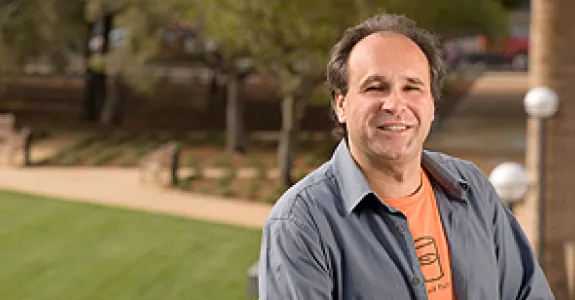
Headshot portrait of Anthony Ricci - Edward C. and Amy H. Sewall Professor in the School of Medicine and Professor of Otolaryngology (Head and Neck Surgery) and (by courtesy) of Molecular and Cellular Physiology

Anthony Ricci - Edward C. and Amy H. Sewall Professor in the School of Medicine and Professor of Otolaryngology (Head and Neck Surgery) and (by courtesy) of Molecular and Cellular Physiology

Bio-X Affiliated Faculty
CAP Profile
Dr. Ricci's Lab Homepage
The Ricci lab uses advanced electrophysiologic, imaging, molecular and pharmacologic techniques to probe mechanisms of mechanotransduction and synaptic transmission at the auditory periphery.

Related videos

USRP 2017 - Organization and Control of Hippocampal Networks

USRP 2021 - Deep Learning the Regulatory Code of the Human Genome

USRP 2012 - Transplantation of intestinal stem cells

  • Show More

Stanford Bio-X Seed Grants

Interdisciplinary Initiatives Program Seed Grant: Materials and Methods for Sustained Delivery of Drugs and Genes to the Cochlea

Interdisciplinary Initiatives Program Round 9 - 2018
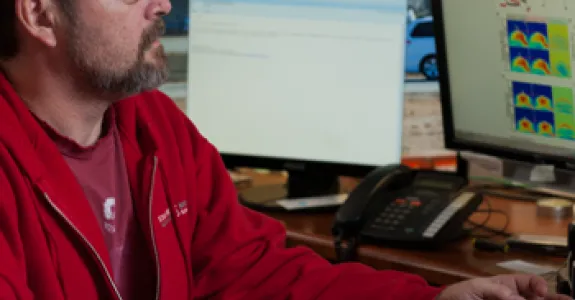
Probing the active mechanics of hair cells - faster than the speed of hearing

Interdisciplinary Initiatives Program Round 6 - 2012

Research News
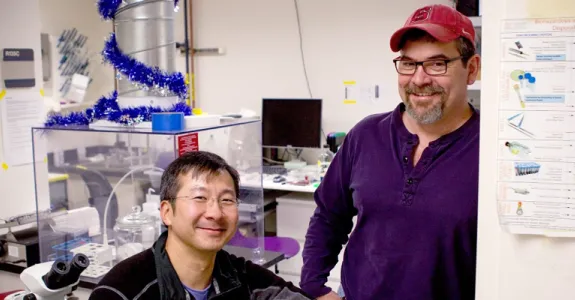
Photo of Dr. Alan Cheng, seated in a wet laboratory area, with Dr. Anthony Ricci standing beside his chair, with both professors smiling at the camera.

Purifying widely used antibiotic could reduce risk it poses to hearing, study finds

December 17, 2020 - Stanford Medicine News Center
Stanford Bio-X affiliated faculty members Alan Cheng and Anthony Ricci have discovered a simple...
Photo of person experiencing hearing loss.

New version of common antibiotic could eliminate risk of hearing loss

January 2, 2015 - Stanford Medicine News Center
Under Bio-X affiliated faculty members Anthony Ricci, Alan Cheng, Daria Mochly-Rosen, and Michael...
Aiming to cure deafness, scientists first to create functional inner-ear cells

May 13, 2010
Research conducted by Bio-X affiliated faculty members Stefan Heller and Anthony Ricci.

  • Show More

Stanford Bio-X

James H. Clark Center, Stanford University 318 Campus Drive Stanford, CA 94305 contact-biox@stanford.edu
Follow @StanfordBioX

  • Contact
  • FAQ
  • Room Reservations
Stanford University
  • Stanford Home
  • Maps & Directions
  • Search Stanford
  • Emergency Info
  • Terms of Use
  • Privacy
  • Copyright
  • Trademark
  • Non-Discrimination
  • Accessibility

© Stanford University, Stanford, California 94305