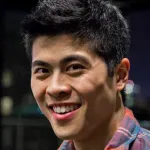
Timothy Wu - Bio-X Undergraduate Fellow
Supported by: Anonymous Donor
Mentor: Peter Kao, Medicine (Pulmonary & Critical Care Medicine)
Dr. Tina Baykaner is an Assistant Professor in the Department of Internal Medicine, Division of Cardiovascular Medicine and Electrophysiology. Following internal medicine residency, cardiovascular medicine and advanced heart failure fellowship trainings at University of California, San Diego and electrophysiology fellowship at Stanford University, Dr. Baykaner joined Stanford University faculty in 2018.
Home Department: Genetics
Faculty Advisor: Michael Snyder
Talk Title: Functional regulatory mechanism of smooth muscle cell-restricted LMOD1 coronary artery disease locus
Event: American Society of Human Genetics 2017 Annual Meeting
Supported by The Matthew Frank Family
Awarded in 2022
Home Department: Biochemistry, Medicine
Faculty Advisors: Mark Krasnow (Biochemistry) and Peter S. Kim (Biochemistry)
Home Department: Chemistry
Faculty Advisor: Jianghong Rao
Talk Title: Toward point-of-care detection of lactam-resistant bacteria
Event: ACS Spring 2022
Dr. Tino Pleiner was born in the small town Zeitz near Leipzig in East Germany. Dr. Pleiner is a First Generation college graduate. He studied biochemistry and molecular biology in Leipzig and Göttingen, Germany. Dr. Pleiner holds a PhD in Molecular Biology from the University of Göttingen, Germany, where he did his lab work at the Max Planck Institute for Multidisciplinary Sciences with Dirk Görlich. He then escaped the rainy weather in Göttingen to do a postdoc with Rebecca Voorhees at Caltech in sunny Pasadena, California.
Dr. Tobias Gerstenberg leads the Causality in Cognition Lab (http://cicl.stanford.edu). The CiCL studies the role of causality in our understanding of the world, and of each other. In their research, they formalize people’s mental models as computational models that yield quantitative predictions about a wide range of situations. To test these predictions, the lab uses a combination of large-scale online experiments, interactive experiments in the lab, and eye-tracking experiments.