
Frontiers in Quantitative Biology Seminar
Frontiers in Quantitative Biology Seminar
How did chemistry give rise to life? The Chen lab studies principles of emergence and evolution of biomolecules by combining experiments and modeling.
How did chemistry give rise to life? The Chen lab studies principles of emergence and evolution of biomolecules by combining experiments and modeling.
NIKTA FAKHRI, MASSACHUSETTS INSTITUTE OF TECHNOLOGY
Nikta Fakhri has pioneered the use and development of fluorescent single-walled carbon nanotubes as probes in soft matter and biophysics.
KANG SHEN, DEPARTMENTS OF BIOLOGY AND PATHOLOGY
The connectivity of a neuron (its unique constellation of synaptic inputs and outputs) is essential for its function. Neuronal connections are made with exquisite accuracy between specific types of neurons. How each neuron finds its synaptic partners has been a central question in developmental neurobiology.
KANG SHEN, DEPARTMENTS OF BIOLOGY AND PATHOLOGY
Attend Dr. Shen's pre-seminar presentation to learn more about his seminar, "Mechanisms of Neuronal Morphogenesis - how does a neuron take its shape?", to be held Thursday, January 14th.
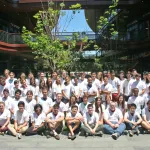
The Bio-X Program would like to announce our call for applications for the Undergraduate Summer Research Program with funding available starting in the summer of 2016.
Complete applications must be received, not postmarked, by December 10, 2015 at 5:00 pm PST.
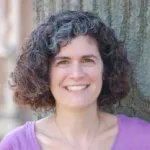
PETRA LEVIN, WASHINGTON UNIVERSITY
The Levin lab's work seeks to understand the molecular mechanisms underlying the temporal and spatial control of cell division.
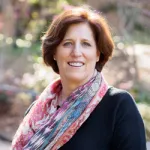
Understanding the structural and dynamic information encoded in the primary sequence of a protein is one of the most fundamental challenges in modern biology. The amino acid sequence of a protein encodes more than the native three-dimensional structure; it encodes the entire energy landscape – an ensemble of conformations whose energetics and dynamics are finely tuned for folding, binding and activity. Dr. Marqusee will present her laboratory's recent results probing these sequence and environmental effects using a combination of single-molecule and ensemble-based studies.
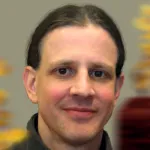
PEHR HARBURY, DEPARTMENT OF BIOCHEMISTRY
Attend Dr. Harbury's pre-seminar presentation to learn more about Dr. Susan Marqusee's seminar, "Touring the Protein Folding Landscape: the View Depends on How and Where You Look", to be held Thursday, December 3rd.
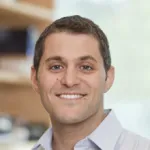
JOSHUA SHAEVITZ, PRINCETON UNIVERSITY
Research in the Shaevitz Lab focuses on three key questions in biophysics: 1. How are behaviors organized by the brain? 2. What determines cell shape? 3. How do cells form complex patterns?
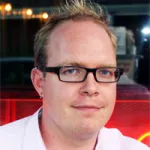
MICHAEL RUST, UNIVERSITY OF CHICAGO
The Rust lab wants to understand how the behavior of living cells is produced by the biochemical interactions of many non-living molecules. They believe that a quantitative theory of how cells work will lead us to better treatments for disease and ultimately the ability to reprogram cells.