
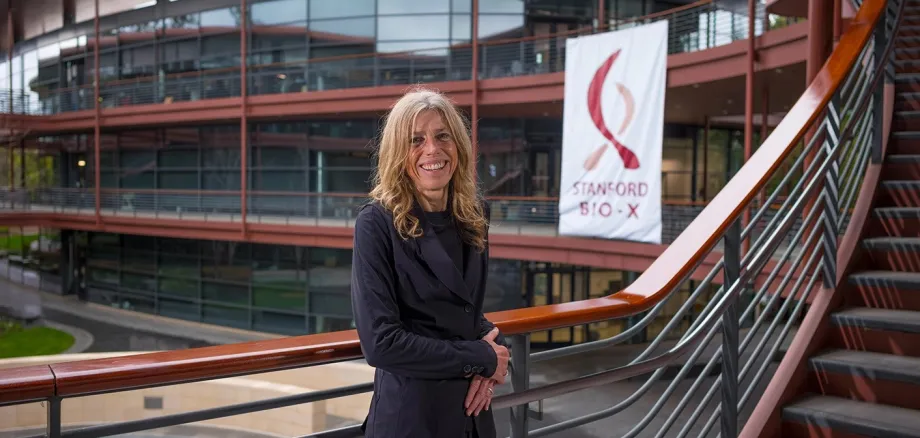
Ellen Kuhl named director of Stanford Bio-X
March 29, 2024 - Stanford News
Kuhl aims to continue Bio-X’s legacy of facilitating multidisciplinary fundamental research and innovation.
Stanford Bio-X affiliated faculty members and fellows are generating scientific advances that expand our understanding of how the body works and will ultimately improve human health. These news stories and press releases describe some of those breakthroughs.
March 29, 2024 - Stanford News
Kuhl aims to continue Bio-X’s legacy of facilitating multidisciplinary fundamental research and innovation.
February 9, 2017 - Stanford News
The world is changing too fast for nature to keep up. Conservation scholars including Bio-X affiliate Elizabeth Hadly agree that strategies need to consider not only how ecosystems operated in recent years, but also thousands and millions of years ago.
February 8, 2017 - Stanford Medicine Scope
Bio-X affiliate Denise Monack and her colleagues have figured out how ST313, a mutant strain of Salmonella, spreads beyond the gut.

February 7, 2017 - Stanford News
A new low-cost, high-performance battery developed under Bio-X affiliate Hongjie Dai could provide an inexpensive storage solution for solar power, which is abundant during the day but must be stored for use at night.
February 6, 2017 - Stanford Medicine News Center
Microfluidics, electronics and inkjet technology underlie a newly developed all-in-one biochip from Bio-X affiliates Ron Davis and James Harris that can analyze cells for research and clinical applications.

February 6, 2017 - Stanford News
With three methods of research, Bio-X affiliates Jure Leskovec and Michael Bernstein find that the situation in which an online discussion occurs influences whether people will troll more than their personal past of trolling suggests.
February 2, 2017 - Stanford Medicine Scope
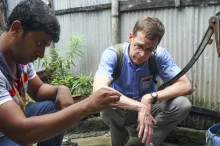
Bio-X affiliate Stephen Luby has been tapped to direct the health evaluation of a project to use water management strategies to potentially improve the lives of more than a billion people globally.
January 31, 2017 - Stanford Engineering
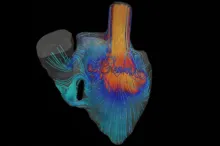
Bio-X affiliate Alison Marsden explains that computer based simulations would enable physicians to test different treatment options and provide a way to choose the best strategy for each patient.
January 26, 2017 - Stanford News
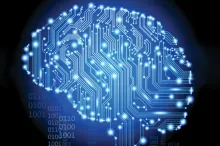
The new technique, from Bio-X affiliate Jin Hyung Lee and Bio-X Fellow Andrew Weitz, probes the neural pathways that cause Parkinson's disease tremors, and also provides a way to map and troubleshoot other circuits in the whole brain.
January 25, 2017 - Stanford News
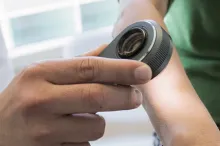
In hopes of creating better access to medical care, Stanford researchers under Bio-X affiliate Helen Blau have trained an algorithm to diagnose skin cancer.
January 25, 2017 - Stanford Medicine News Center
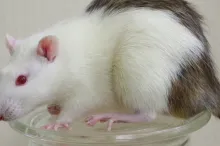
Growing organs from one species in another may one day relieve transplant shortages. Researchers under Bio-X affiliate Hiromitsu Nakauchi show that islets from rat-grown mouse pancreases can reverse disease when transplanted into diabetic mice.
January 24, 2017 - Stanford Medicine Scope
Bio-X affiliates Connie Weyand and Jorg Goronzy have discovered that in giant cell arteritis, in which the immune system attacks the aorta, the immune response is too strong because an immune checkpoint isn’t braking hard enough.

January 24, 2017 - Stanford Medicine Scope
New research from Bio-X affiliates Howard Chang, Robert Tibshirani, and William Greenleaf has uncovered a new genetic phenomenon that ensures that, for some genes, one parent’s influence dominates.
January 23, 2017 - Stanford Medicine Scope
Bio-X affiliate Desiree LaBeaud and colleagues in Kenya have devised a prevention project at multiple sites around Kenya to educate people about how to prevent mosquito breeding in local water sources.
January 19, 2017 - Stanford Medicine Scope
Bio-X affiliates Tom Südhof and Marius Wernig have established a connection that may help explain why different genes confer differential Alzheimer’s susceptibilities.
January 19, 2017 - Stanford Medicine News Center
Effective anti-tumor activity requires a systemic immune response at the tumor site. A study from Bio-X affiliates Edgar Engleman and Garry Nolan may help clinicians pinpoint why only some cancer patients respond to immunotherapies.
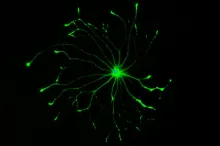
January 18, 2017 - Stanford Medicine News Center
Astrocytes, star-shaped cells in the central nervous system, are essential to the survival and healthy function of brain neurons. But aberrant astrocytes may be driving neurodegenerative disorders, Bio-X affiliates Ben Barres and Marion Buckwalter find.
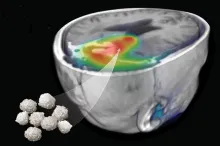
January 18, 2017 - Stanford Medicine News Center
In the culmination of a 10-year-long effort, researchers under Bio-X affiliate Sam Gambhir have demonstrated the first visualization of human immune cells as they track down brain tumor cells in living patients.
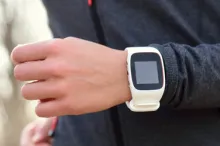
January 17, 2017 - Stanford Medicine News Center
The new center, which will be led by Stanford faculty including Bio-X affiliate Mintu Turakhia, aims to advance the field of digital health by enabling collaborations between faculty and industry.
January 16, 2017 - Stanford News
Researchers under Bio-X affiliate Jennifer Dionne recorded reactions at near-atomic-scale resolution, another step toward building a better battery.
January 16, 2017 - Stanford Medicine News Center
Researchers under Bio-X affiliates Gregory Scherrer, David Clark, and Ben Barres, including Bio-X Fellow Jasmine Dickinson, have identified the receptors to which opioids bind to produce tolerance to the drugs and increased sensitivity to pain.
January 16, 2017 - Stanford Medicine News Center
A chronic inflammatory process that occurs in some, but not all, older people may trigger cardiovascular problems, a study from Bio-X affiliates Mark Davis, Francois Haddad, Garry Nolan, and Calvin Kuo and Bio-X Fellow Gabriela Fragiadakis shows.
January 12, 2017 - Stanford Medicine News Center
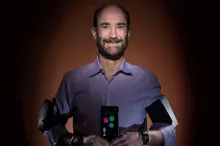
New research from Bio-X affiliates Michael Snyder and Tracey McLaughlin shows that fitness monitors and other wearable biosensors can tell when an individual’s heart rate, skin temperature and other measures are abnormal, suggesting possible illness.
January 12, 2017 - Stanford Medicine Scope
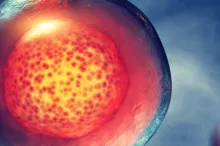
Bio-X affiliate Ravindra Majeti and then postdoctoral fellow Mark Chao became the first to reset a human leukemia cell to a nearly embryonic state as an induced pluripotent stem (iPS) cell.
January 11, 2017 - Stanford Medicine News Center
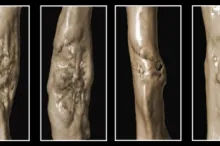
Bio-X affiliates Michael Longaker, Geoffrey Gurtner, Philip Beachy, Fan Yang, Stuart Goodman, and Irving Weissman found that activating bone stem cells helps repair fractures in diabetic mice. Applying a protein to the fracture site enhanced healing.
January 10, 2017 - Stanford Medicine News Center
Nature Publishing Group has launched a new journal and its inaugural issue includes a “manifesto for reproducible science” co-authored by Bio-X affiliate John Ioannidis.
January 10, 2017 - Stanford News
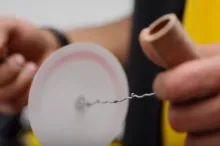
Bioengineers under Bio-X affiliate Manu Prakash have developed an ultra-low-cost, human-powered centrifuge that separates blood plasma from red cells in 1.5 minutes.
January 9, 2017
The Stanford Bio-X Leadership Council is pleased to announce the 14th annual competition for Stanford Bio-X Graduate Student Fellowships.
January 5, 2017 - Stanford News
A study from Bio-X affiliate Kalanit Grill-Spector finds that the amount of brain tissue does not only decrease through our lives: in some cases the brain can also add tissue.

January 5, 2017 - Stanford Medicine News Center
A new version of the free MyHeart Counts app is available. It now features graphical feedback, interventions and coaching. Bio-x affiliate Euan Ashely is the principal investigator for the MyHeart Counts study.
January 1, 2017 - Stanford News
Supported by a Bio-X Seed Grant, Bio-X affiliated faculty Jennifer Dionne and Miriam Goodman have teamed up to unravel the biological forces at play within our bodies. The first phase: feeding nanoparticles to worms.