
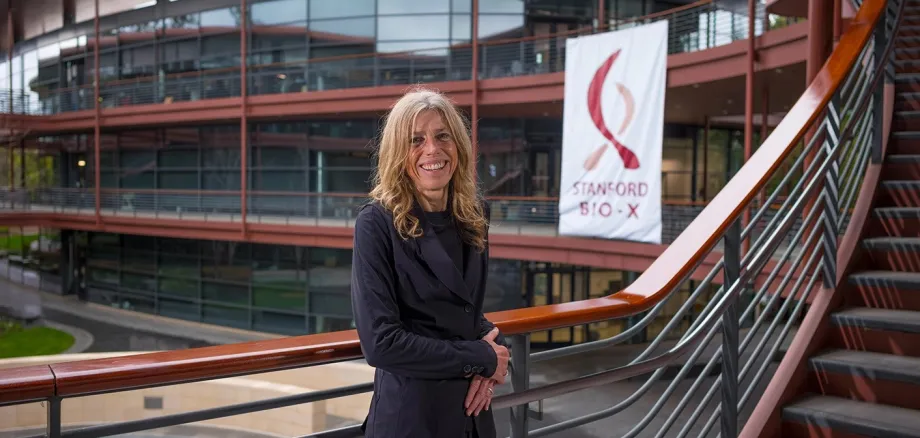
Ellen Kuhl named director of Stanford Bio-X
March 29, 2024 - Stanford News
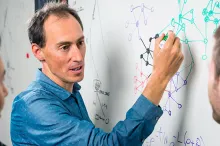
Kuhl aims to continue Bio-X’s legacy of facilitating multidisciplinary fundamental research and innovation.
Stanford Bio-X affiliated faculty members and fellows are generating scientific advances that expand our understanding of how the body works and will ultimately improve human health. These news stories and press releases describe some of those breakthroughs.
March 29, 2024 - Stanford News
Kuhl aims to continue Bio-X’s legacy of facilitating multidisciplinary fundamental research and innovation.
July 19, 2017 - Stanford Medicine Scope
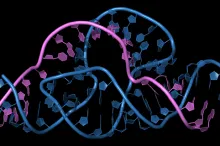
Stanford Bio-X affiliated faculty Howard Chang has uncovered an unexpected immune function of circular RNA molecules that appears to protect cells from viral infection.

July 19, 2017 - Stanford Medicine Scope
Recent cases of Rift Valley fever virus warrant vigilance given its potential effects on local and national economies, says Stanford Bio-X affiliated faculty Desirée LaBeaud.

July 18, 2017 - Stanford Medicine Scope
Stanford Bio-X affiliated faculty members Kevin Wang and Sharon Pitteri have devised a way to use the immensely popular gene editing tool CRISPR/Cas9 to loop together any two DNA segments.

July 17, 2017 - Stanford Medicine News Center
Stanford Bio-X affiliated faculty members Amit Etkin and James Gross measured brain activity in PTSD patients before and after psychotherapy and found that they could predict how well patients would respond to treatment.

July 14, 2017 - Stanford News
A first-of-its-kind effort from researchers including Stanford Bio-X affiliated faculty Giulio De Leo combines economic, ecological and epidemiological models. The lessons learned could inform interventions to lift people out of poverty.

July 11, 2017 - Stanford Medicine News Center
Stanford Medicine, including Stanford Bio-X affiliated faculty Gary Steinberg, is using a new software system that combines imaging from MRIs, CT scans and angiograms to create a 3D model that physicians and patients can see and manipulate.
July 11, 2017 - Stanford Engineering
Silicon chips are single story, but using new semiconductor materials developed by Stanford Bio-X affiliated faculty Subhasish Mitra, H.-S. Philip Wong, and Roger Howe, computer logic and memory can be stacked like floors in a building.
July 10, 2017 - Stanford News
From steps counted by smartphones, Stanford Bio-X affiliated faculty Jure Leskovec and Scott Delp and Stanford Bio-X Fellow Jennifer Hicks discover “activity inequality.”

July 10, 2017 - Stanford News
Stanford Bio-X affiliated faculty member Jeremy Goldbogen has found that humpback whales flap their foreflippers, which helps explain whale maneuvering and could improve designs inspired by their movement.
July 10, 2017 - Stanford Medicine News Center
The brain hormone may help treat social impairments in children with autism whose baseline oxytocin levels are low before treatment, according to findings from Stanford Bio-X affiliates Karen Parker, Joseph Garner, and Antonio Hardan, with support from a Stanford Bio-X Seed Grant.

July 5, 2017 - Stanford Engineering
Research from Stanford Bio-X affiliated faculty member Kevin Arrigo finds that iron-rich meltwater from Greenland’s glaciers are helping fuel a summer bloom of phytoplankton.

June 29, 2017 - Stanford Medicine Scope
Stanford Bio-X affiliated faculty Heike Daldrup-Link, Jianghong Rao, Sam Gambhir, Samuel Cheshier, and Frederick Chin are trying to deliver drugs by way of an enzyme that sticks out from glioblastoma cells.

June 28, 2017 - Stanford News
Stanford Bio-X affiliated faculty Mark Cutkosky's group combined gecko-inspired adhesives and a custom robotic gripper and tested it in multiple zero gravity settings, including the International Space Station.
June 28, 2017 - Stanford Medicine News Center
Among young adults at risk for suicide, highly variable sleep patterns may augur an increase in suicidal symptoms, independent of depression, a study from Stanford Bio-X affiliate Rebecca Bernert has found.
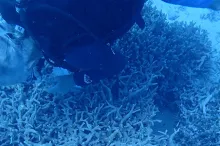
June 28, 2017 - Stanford News
Stanford Bio-X affiliated faculty Stephen Palumbi is exploring how corals that re-colonized Bikini Atoll after nuclear bomb tests 70 years ago have adapted to persistent radiation. The work is featured in a PBS series.
June 28, 2017 - Stanford Medicine News Center
Using health records, Stanford Bio-X affiliate Nigam Shah's group developed an algorithm for scoring the risk of stroke patients experiencing atrial fibrillation, a major risk factor for a second stroke.
June 27, 2017 - Stanford Medicine Scope
Stanford Bio-X affiliates Harry Greenberg and William Robinson zeroed in on a few structural components of rotavirus that appear to be similar enough from one strain to the next that a single vaccine might generate antibodies effective against all strains.
June 26, 2017 - Stanford Medicine Scope
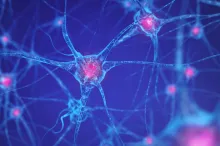
The research, from Stanford Bio-X affiliated faculty member and Clark Center faculty member Alice Ting, emerged out of neuroscientists’ frustration with their inability to capture a fine-grained picture of what the whole brain was doing in experiments.
June 26, 2017 - Stanford News
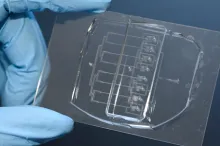
Bio-X affiliate Sindy Tang developed a microscopic guillotine to try to learn how single cells repair wounds, which could lead to self-healing materials and machines.
June 26, 2017 - Stanford Medicine News Center
Atrial fibrillation patients who got early cardiology care had a reduced risk of stroke, Bio-X affiliates Mintu Turakhia, Sanjiv Narayan, and Paul J. Wang found.

June 22, 2017 - Stanford News
The nation’s drug policies are based on unproven assumptions about addiction. Bio-X affiliates Brian Knutson and Rob Malenka explain that neuroscience could help shape more effective policies and save lives.
June 22, 2017 - Stanford Medicine News Center
Bio-X affiliates Euan Ashley, Stephen Montgomery, and James Ford and 2010 Bio-X SIGF Fellow Aaron Wenger have used a technology called long-read sequencing to diagnose a patient’s rare genetic condition that current technology failed to diagnose.
June 22, 2017 - Stanford Medicine Scope
Bio-X affiliate Mike Baiocchi applies statistics in ways that could improve global health. His latest project is a study on a massive rape-prevention program in Kenya.
June 21, 2017 - Stanford Medicine Scope
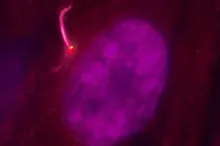
Researchers including Bio-X affiliates Peter Jackson and Edward Plowey have not only solved one of the thornier mysteries about how obesity works, they’ve made a discovery they think could help tame the global obesity epidemic.
June 20, 2017 - Stanford Medicine Scope
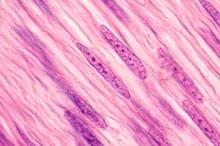
Research from Bio-X affiliate Thomas Rando and 2008 Bio-X Fellow Melinda Cromie has outlined a 3-part approach that, in mice, helps muscle stem cells grow new tissue.

July 3, 2017 - Stanford Medicine News Center
Humans in Europe and Asia evolved shorter bones and an increased risk of osteo-arthritis, which may have helped in colder climates, Bio-X affiliate David Kingsley finds.
June 20, 2017 - Stanford Medicine News Center
In a provocative new perspective piece, researchers under Bio-X affiliate Jonathan Pritchard say that disease genes are spread uniformly across the genome, not clustered in specific molecular pathways, as has been thought.
June 20, 2017 - Stanford Medicine News Center
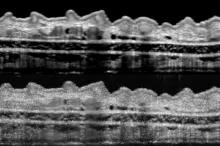
Bio-X affiliates Adam de la Zerda, Steve Chu, and Darius Moshfeghi and Bio-X Bowes Fellow Orly Liba have found a simple, low-cost fix that substantially improves optical scanning images, opening the door to "virtual biopsies."
June 16, 2017 - Stanford News
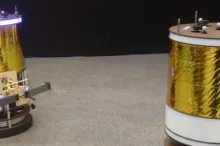
Space robots utilizing work by Bio-X affiliate Mark Cutkosky that are traveling through space, hauling debris and exploring distant asteroids, may hold the technological key to problems facing drones and autonomous cars here on Earth.
June 15, 2017 - Stanford Medicine News Center
Ribosomes are startlingly variable in their composition and associations, which confers on them the ability to regulate genes, confounding previous ideas, Bio-X affiliates Maria Barna and Mary Teruel say. The work is partially supported by an IIP Seed Grant.