Over 1,300 faculty are affiliated with Stanford Bio-X and are eligible to apply for our grants and be notified about fundraising opportunities, collaborations with industries, events, courses and available facilities and instruments. Learn how to become an affiliate!

Search Stanford Bio-X affiliated faculty

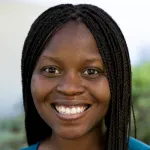
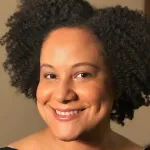
Indoor headshot photo of a smiling Black female faculty member, Dr. Lauren Goins, Assistant Professor of Developmental Biology.

Lauren Goins - Assistant Professor of Developmental Biology

Bio-X Affiliated Faculty

Dr. Lauren Goins is an Assistant Professor in the Department of Developmental Biology. The Goins Lab aims to understand how cells make decisions. Their research focuses on how young, immature blood stem cells, with the potential to become many different cell types, choose between these cell fates by studying the fundamental molecular and cellular mechanisms that control the decision-making process.
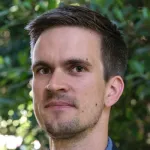
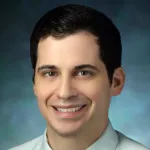
Outdoor headshot photo of a smiling male faculty member, Dr. Tino Pleiner, Assistant Professor of Molecular & Cellular Physiology at Stanford University.

Tino Pleiner - Assistant Professor of Molecular & Cellular Physiology

Bio-X Affiliated Faculty

Dr. Tino Pleiner was born in the small town Zeitz near Leipzig in East Germany. Dr. Pleiner is a First Generation college graduate. He studied biochemistry and molecular biology in Leipzig and Göttingen, Germany. Dr. Pleiner holds a PhD in Molecular Biology from the University of Göttingen, Germany, where he did his lab work at the Max Planck Institute for Multidisciplinary Sciences with Dirk Görlich. He then escaped the rainy weather in Göttingen to do a postdoc with Rebecca Voorhees at Caltech in sunny Pasadena, California. 

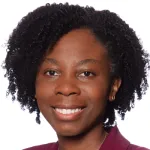
Indoor headshot photo of a smiling Black female faculty member, Dr. Glaivy Batsuli, Assistant Professor of Pediatrics at Stanford University.

Glaivy Batsuli - Assistant Professor of Pediatrics (Hematology & Oncology)

Bio-X Affiliated Faculty

Dr. Glaivy Batsuli, MD is an Assistant Professor of Pediatrics at Stanford University in the Division of Pediatric Hematology, Oncology, Stem Cell Transplantation & Regenerative Medicine. She is a practicing Pediatric Hematologist with the Bass Center for Childhood Cancer and Blood Diseases at Lucile Packard Children’s Hospital. Dr. Batsuli received her B.S. in Public Health at the University of North Carolina at Chapel Hill and her M.D. from the University of Pittsburgh School of Medicine in Pittsburgh, PA. Dr.

Headshot portrait of Nathan Lo - Assistant Professor of Medicine (Infectious Diseases) and (by courtesy) of Epidemiology & Population Health

Nathan Lo - Assistant Professor of Medicine (Infectious Diseases) and (by courtesy) of Epidemiology & Population Health

Bio-X Affiliated Faculty

Dr. Nathan Lo, MD PhD, is an Assistant Professor of Infectious Diseases and a physician-scientist. His research group studies the transmission of infectious diseases and impact of public health interventions to inform policy aimed at controlling and eliminating these diseases. Nathan’s interest spans across multiple infectious diseases, both domestically and internationally, with a focus on vaccine-preventable infections (such as measles and COVID-19) and neglected global infectious diseases (such as schistosomiasis and typhoid fever).

Headshot photo of a smiling whilte male faculty member with a moustache and beard, Dr. William Goodyer, Assistant Professor of Pediatrics at Stanford University.

William Goodyer - Assistant Professor of Pediatrics (Cardiology)

Bio-X Affiliated Faculty

Dr. William Goodyer is a physician scientist who specializes in Pediatric Cardiology and Electrophysiology. Dr. Goodyer graduated from McGill University (Montreal, Canada) with a BSc in Biology prior to completing his graduate studies at Stanford University in the Medical Scientist Training Program (MSTP). He subsequently completed residency training in Pediatrics at Boston Children’s Hospital before returning to Stanford to complete a fellowship in Pediatric Cardiology and advanced fellowship in Pediatric Electrophysiology.

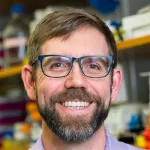
Indoor headshot photo of a smiling male faculty member with glasses, a beard, and short brown hair, Dr. Michael Jewett, Professor of Bioengineering at Stanford University.

Michael Jewett - Professor of Bioengineering

Bio-X Affiliated Faculty

Dr. Michael Jewett is a Professor of Bioengineering at Stanford University. He received his B.S. from UCLA and PhD from Stanford University, both in Chemical Engineering. He completed postdoctoral studies at the Center for Microbial Biotechnology in Denmark and the Harvard Medical School. Jewett was also a guest professor at the Swiss Federal Institute of Technology (ETH Zurich). His research group focuses on advancing synthetic biology research to support planet and societal health, with applications in medicine, manufacturing, sustainability, and education.

Outdoor headshot photo of a smiling male faculty member, Dr. Matteo Mole, Assistant Professor of Obstetrics & Gynecology at Stanford University.

Matteo Molè - Assistant Professor of Obstetrics and Gynecology (Dunlevie Maternal-Fetal Medicine Center for Discovery, Innovation and Clinical Impact)

Bio-X Affiliated Faculty

Dr. Matteo A. Molè, PhD, is an Assistant Professor in the Department of Obstetrics and Gynecology at Stanford University. He is a member of the Division of Reproductive, Stem Cell and Perinatal Biology, as well as the Dunlevie Maternal-Fetal Medicine Center for Discovery, Innovation and Clinical Impact.

Outdoor headshot photo of a Black female faculty member, Dr. Florentine Rutaganira, Assistant Professor of Biochemistry and Developmental Biology at Stanford University.

Florentine Rutaganira - Assistant Professor of Biochemistry and Developmental Biology

Bio-X Affiliated Faculty

Dr. Florentine Rutaganira uses choanoflagellates - the closest living single-celled relatives to animals - to study the origin of animal cell communication. Dr. Rutaganira applies chemical, genetic, and cell biological tools to probe choanoflagellate cell-cell communication, with implications for understanding not only animal cell signaling, but also the origin of multicellularity in animals.

Pages