
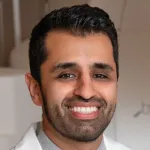
Dr. Anusha Kalbasi is Associate Professor of Radiation Oncology at the Stanford University School of Medicine. He is a member of the Stanford Cancer Institute, the Immunology and Cancer Biology programs, and the Parker Institute for Cancer Immunotherapy. As a physician-scientist, Dr. Kalbasi leads both clinical trials and laboratory research at the intersection of cancer and immunology. He is an expert in immunotherapy, radiation therapy and the treatment of patients with sarcoma, and is a board-certified radiation oncologist. In the clinic, Dr. Kalbasi is a radiation oncologist specializing in the treatment of patients with sarcoma and other solid tumors, with expertise in early phase clinical trials related to immunotherapy, cellular therapy, and radiation therapy.
Dr. Kalbasi received his B.S. in biochemistry from UCLA and his M.D. from the David Geffen School of Medicine at UCLA, and completed pre-doctoral research training at the NCI Surgery Branch engineering apoptosis-resistant T cells for immunotherapy. He completed his research-track clinical training in radiation oncology at the University of Pennsylvania, with post-doctoral work where he studied chemokines, myeloid trafficking and the tumor-intrinsic immune response to radiation. As a post-doc at UCLA he described how pattern recognition receptor signaling can uncouple interferon signaling and antigen presentation for T cell immunotherapy. Later as a junior faculty, he described synthetic IL9R signaling as an approach to overcome T cell intrinsic limitations to cell-based therapy. In conjunction with laboratory work, Dr. Kalbasi has led early phase clinical trials, including trials investigating novel approaches to radiation therapy, neoadjuvant immunotherapy for sarcoma and first-in-human T cell therapy.
The Kalbasi laboratory studies cancer immunology, with a focus on understanding—and re-engineering—the molecular conversations that immune cells have with one another and with cancer cells, especially through cytokines. By mapping how these signals are sent, received, and interpreted within immune cells and cancer cells, the lab aims to design next-generation immunotherapies that deliver the right messages at the right time—making cancer-fighting cells more potent, more persistent, and more precise.