Welcome to Bio-X

Welcome to Bio-X

  • Support
  • Contact
  • About
    • Bio-X History
    • Contact Us
    • Clark Center
      • Map & Directions
      • Tours
      • Dining Options
    • Building Services
      • Room Scheduling
      • IT
      • General Facilities Issues
      • Urgent Facilities Issues
      • Non-Emergency Facilities Requests
      • Building Access Request
      • Lab Safety
      • Shared Equipment
    • FAQ
  • People
  • Research
    • Seed Grants
      • Browse Seed Grants
    • Visiting Scholars/Visiting Postdocs
    • PhD Fellows
    • Undergraduate Research
    • Ventures
      • Food@Stanford
      • NeuroVentures
    • Travel Awards
    • Research Partners
    • Browse Videos
    • Browse All Research
  • Highlights
    • Videos
      • Clark Center @ 10x Video
    • Bio-X in the News
  • Videos
    • USRP Faculty Talks
    • Symposium Lectures
    • Additional Videos
  • Events
    • Upcoming Events
    • Archive
    • USRP 2013 - Development of Functional and Structural Brain Networks: Implications for Neurodevelopmental Disorders

    • Talk Videos
  • Get Involved
    • Faculty
    • Students
      • Courses & Workshops
    • Alumni & Friends
    • Corporations
      • Partnership Models
      • Benefits of Partnership
      • Corporate Member Projects
      • Corporate Forum Newsletter Archive
    • Browse Videos
    • Seminar Series
      • Stanford Bio-X Frontiers in Interdisciplinary Biosciences: 2019/2020
    • Support Bio-X
      • Stanford Bio-X White Paper
  1. Home
  2. Events

USRP 2013 - Development of Functional and Structural Brain Networks: Implications for Neurodevelopmental Disorders

Development of Functional and Structural Brain Networks: Implications for Neurodevelopmental Disorders

2013 USRP Talks - Wednesday, June 26, 2013

Events

  • Upcoming Events
  • Archive
  • USRP 2013 - Development of Functional and Structural Brain Networks: Implications for Neurodevelopmental Disorders
  • Talk Videos

Courses and Workshops

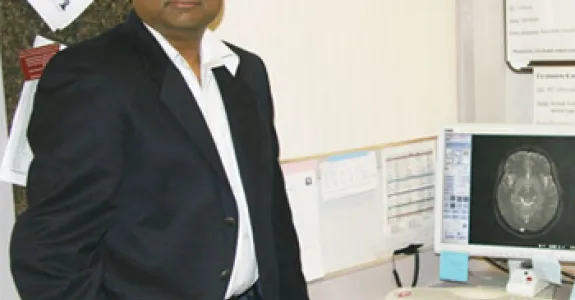
Headshot portrait of Vinod Menon - Rachel L. and Walter F. Nichols, MD, Professor and Professor (by courtesy) of Neurology

Vinod Menon - Rachel L. and Walter F. Nichols, MD, Professor and Professor (by courtesy) of Neurology

Bio-X Affiliated Faculty
CAP Profile
Dr. Menon’s group uses imaging techniques such as functional magnetic resonance imaging and diffusion tensor imaging to study the architecture of the cognitive networks in the human brain in order to learn how these networks are organized and how these networks evolve as the child develops, learns and matures.

Related videos

USRP 2015 - Controls on the Evolution of Organism Size over the Past Four Billion Years

USRP 2018 - Engineering the Optimal Environment for Neural Recovery

USRP 2012 - Dissecting the genetic risk for coronary heart disease

  • Show More

Stanford Bio-X Seed Grants

Dynamic Brain Imaging Using Simultaneous fMRI and EEG Recordings

Interdisciplinary Initiatives Program Round 2 – 2002

Other Stanford Bio-X Supported Research
Tue Herlau: Reliable inference of dynamical brain networks from multi-subject fMRI data

   Fellow - Tue Herlau - 2016

Research News

Stock photo of a man sitting with a young child who is counting with their fingers in front of a piece of paper with addition equations.

Math learning disability affects how the brain tackles problems

February 9, 2026 - Stanford Medicine News
On simple math problems, even if they’re getting correct answers, kids with a math learning...
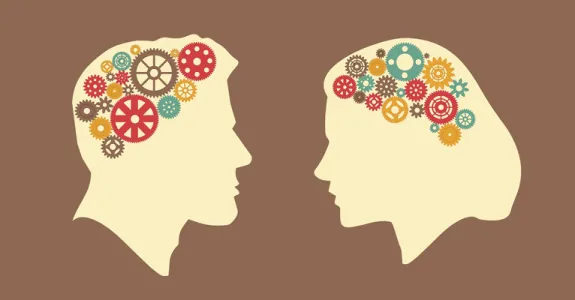
Graphic illustration of two heads in profile facing each other, one designed to look male with short hair and one female with long hair, with colorful gears inside the area where their brains would be.

Stanford Medicine study identifies distinct brain organization patterns in women and men

February 20, 2024 - Stanford Medicine News Center
Stanford Bio-X affiliated faculty member Vinod Menon, with co-lead authors Drs. Srikanth Ryali and...

Photo of mother and daughter.

Mom's voice activates many different regions in children's brains

May 16, 2016 - Stanford Medicine News Center
A far wider swath of brain areas is activated when children hear their mothers than when they hear...

  • Show More

Stanford Bio-X

James H. Clark Center, Stanford University 318 Campus Drive Stanford, CA 94305 contact-biox@stanford.edu
Follow @StanfordBioX

  • Contact
  • FAQ
  • Room Reservations
Stanford University
  • Stanford Home
  • Maps & Directions
  • Search Stanford
  • Emergency Info
  • Terms of Use
  • Privacy
  • Copyright
  • Trademark
  • Non-Discrimination
  • Accessibility

© Stanford University, Stanford, California 94305