
Welcome to Bio-X

Welcome to Bio-X

  • Support
  • Contact
  • About
    • Bio-X History
    • Contact Us
    • Clark Center
      • Map & Directions
      • Tours
      • Dining Options
    • Building Services
      • Room Scheduling
      • IT
      • General Facilities Issues
      • Urgent Facilities Issues
      • Non-Emergency Facilities Requests
      • Building Access Request
      • Lab Safety
      • Shared Equipment
    • FAQ
  • People
  • Research
    • Seed Grants
      • Browse Seed Grants
    • Visiting Scholars/Visiting Postdocs
    • PhD Fellows
    • Undergraduate Research
    • Ventures
      • Food@Stanford
      • NeuroVentures
    • Travel Awards
    • Research Partners
    • Browse Videos
    • Browse All Research
  • Highlights
    • Videos
      • Clark Center @ 10x Video
    • Bio-X in the News
  • Videos
    • USRP Faculty Talks
    • Symposium Lectures
    • Additional Videos
  • Events
    • Upcoming Events
    • Archive
    • USRP 2017 - The unifying mechanism of fibrotic diseases
    • Talk Videos
  • Get Involved
    • Faculty
    • Students
      • Courses & Workshops
    • Alumni & Friends
    • Corporations
      • Partnership Models
      • Benefits of Partnership
      • Corporate Member Projects
      • Corporate Forum Newsletter Archive
    • Browse Videos
    • Seminar Series
      • Stanford Bio-X Frontiers in Interdisciplinary Biosciences: 2019/2020
    • Support Bio-X
      • Stanford Bio-X White Paper
  1. Home
  2. Events

USRP 2017 - The unifying mechanism of fibrotic diseases

The unifying mechanism of fibrotic diseases

2017 USRP Talks - Wednesday, August 23, 2017

Events

  • Upcoming Events
  • Archive
  • USRP 2017 - The unifying mechanism of fibrotic diseases
  • Talk Videos

Courses and Workshops

Photo of smiling white female faculty member with long brown hair, Dr. Gerlinde Wernig, Assistant Professor of Pathology at Stanford University.

Gerlinde Wernig - Assistant Professor of Pathology

Bio-X Affiliated Faculty
Stanford Profile
Dr. Wernig's lab focuses on understanding the pathomechanisms of end stage organ fibrosis with the ultimate goal to help identify new targets for effective therapies.

Related videos

USRP 2011 - Imaging Informatics: From Pixels to Biomedical Meaning

USRP 2018 - Innovation and the Future of Heart Rhythm Therapy

USRP 2012 - Engineering mice to study chromatin in vivo

  • Show More

Research News

Photo of a surgeon's gloved hand holding up a pair of surgical scissors in the foreground, with operating room activity in the background.

An easy-to-apply gel prevents abdominal adhesions in animals in Stanford Medicine study

March 12, 2025 - Stanford Medicine News Center
Up to 90% of abdominal surgeries result in adhesions — abnormal scarring that ties together...
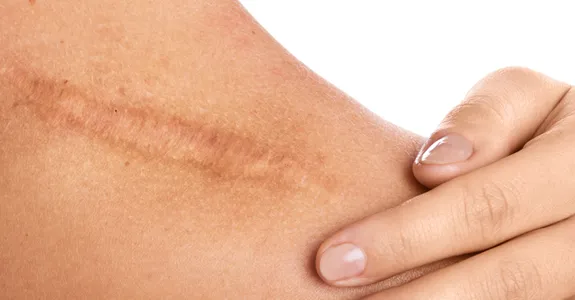
Photo of a person laying their hand on their shoulder next to a large scar.

Researchers find drug that enables healing without scarring

April 22, 2021 - Stanford Medicine News Center
Researchers under Stanford Bio-X affiliated faculty members Michael Longaker, Geoffrey Gurtner,...
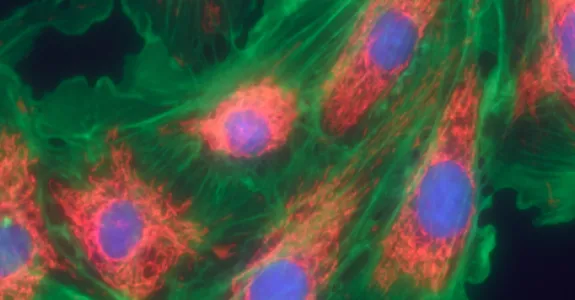
Graphic image of fibroblast cells with cell components colored.

Fibrosis reversed when ‘don’t eat me’ signal blocked

April 17, 2017 - Stanford Medicine News Center
A common signaling pathway unites diverse fibrotic diseases in humans, Bio-X affiliates Gerlinde...

Stanford Bio-X

James H. Clark Center, Stanford University 318 Campus Drive Stanford, CA 94305 contact-biox@stanford.edu
Follow @StanfordBioX

  • Contact
  • FAQ
  • Room Reservations
Stanford University
  • Stanford Home
  • Maps & Directions
  • Search Stanford
  • Emergency Info
  • Terms of Use
  • Privacy
  • Copyright
  • Trademark
  • Non-Discrimination
  • Accessibility

© Stanford University, Stanford, California 94305