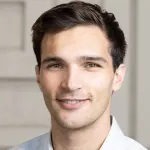
• Headshot portrait of Max Silverstein - Bio-X Undergraduate Fellow

    Max Silverstein - Bio-X Undergraduate Fellow

    2012 Undergraduate Summer Research Program Participant
    Home Department: undeclared
    Supported by: Bio-X
    Mentor: Philip A. Beachy, Professor of Biochemistry and Developmental Biology

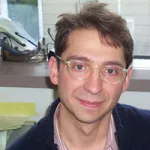
  • Headshot portrait of Max Saccone - Bio-X Travel Awardee

    Max Saccone - Bio-X Travel Awardee

    Awarded in 2024

    Home Department: Radiology and Chemical Engineering
    Faculty Advisor: Joseph DeSimone
    Talk Title: From polymers to power: Vat photopolymerization additive manufacturing of functional materials for energy, environment, and health applications
    Event: ACS Spring 2024

    Awarded in 2023

    Talk Title: 3D printed flow-directing electrodes with nano-/micro-scale porosity for controlling transport and reactions
    Event: 2023 AIChE Annual Meeting

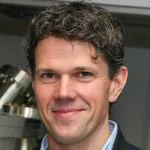
  • Headshot portrait of Max Greenfeld - Bio-X Travel Awardee

    Max Greenfeld - Bio-X Travel Awardee

    Awarded in 2012

    Home Department: Biochemistry
    Faculty Advisor: Daniel Herschlag
    Talk Title: Exploration of a simplified RNA folding landscape
    Event: Zing Nucleic Acids Conference 2012

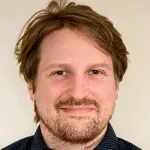
  • Headshot portrait of Maurice Lee - Bio-X Travel Awardee

    Maurice Lee - Bio-X Travel Awardee

    Awarded in 2016

    Home Department: Chemistry
    Faculty Advisor: W.E. Moerner
    Talk Title: 3D single-molecule super-resolution fluorescence microscopy with the corkscrew point spread function
    Event: 2016 Biophysical Society Annual Meeting

  • Photo of smiling white male faculty member with brown hair and a brown beard, Dr. Matthias Garten, Assistant Professor of Microbiology & Immunology and Bioengineering at Stanford.

    Matthias Garten - Assistant Professor of Microbiology & Immunology and of Bioengineering

    Bio-X Affiliated Faculty

    Dr. Matthias Garten is an assistant professor in the department of Immunology and Microbiology and the department of Bioengineering. He is a membrane biophysicist who is driven by the question of how the malaria parasite interfaces with its host-red blood cell, how we can use the unique mechanisms of the parasite to treat malaria and to re-engineer cells for biomedical applications.

Pages