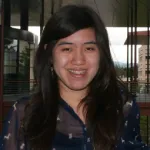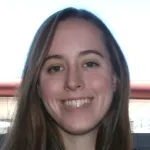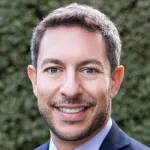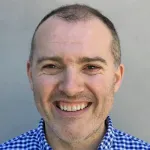

• Headshot portrait of Christine Wang - Bruce and Elizabeth Dunlevie Fellow

    Christine Wang - Bruce and Elizabeth Dunlevie Fellow

    Bio-X SIGF Graduate Student Fellow

    Awarded in 2014
    Home Department: Bioengineering

    Faculty Advisors: Fan Yang (Bioengineering and Orthopaedic Surgery), Gerald Grant (Neurosurgery), and Michelle Monje (Neurology)

  • Headshot portrait of Christine Wang - Bio-X Travel Awardee

    Christine Wang - Bio-X Travel Awardee

    Awarded in 2014

    Home Department: Bioengineering
    Faculty Advisor: Fan Yang
    Talk Title: Comparative study of primary glioblastoma (GBM) and diffuse intrinsic pontine glioma (DIPG) cells from adult and pediatric brain cancer patients cultured in 3D PEG-based biomimetic hydrogel
    Event: Biomedical Engineering Society Annual Meeting 2014

  • Headshot portrait of Christine McLeavey - Bio-X Bowes Fellow

    Christine McLeavey - Bio-X Bowes Fellow

    Bio-X Graduate Student Fellow

    Awarded in 2009
    Home Department: Neurosciences
    Faculty Advisors: Scott Delp (Bioengineering, Mechanical Engineering) and Karl Deisseroth (Bioengineering, Psychiatry)

  • Headshot portrait of Christine Khademi - Bio-X Undergraduate Fellow

    Christine Khademi - Bio-X Undergraduate Fellow

    2011 Undergraduate Summer Research Program Participant
    Home Department: Biology (Neurobiology)
    Supported by: Bio-X
    Mentor: Sanjiv Sam Gambhir, Professor of Bioengineering, Materials Sci & Engineering, and of Radiology
  • Photo of Dr. Christine Jacobs-Wagner, Professor of Biology at Stanford University.

    Christine Jacobs-Wagner - Dennis Cunningham Professor and Professor of Biology

    Bio-X Affiliated Faculty

    Cellular replication is a defining feature of life. But how do cells reproduce themselves? Dr. Christine Jacobs-Wagner's laboratory addresses this fundamental question by probing the governing principles and the spatiotemporal mechanisms that underlie cellular replication, with an emphasis of cell morphogenesis, cell growth, chromosome dynamics and cell cycle regulation. They use bacteria as model systems for two main reasons. First, bacteria lack the complex control systems of eukaryotes (e.g., cyclin/Cdk machinery); yet their multiplication process is remarkably efficient and faithful.

  • Headshot portrait of Christina Wang - Bio-X Undergraduate Fellow

    Christina Wang - Bio-X Undergraduate Fellow

    2013 Undergraduate Summer Research Program Participant
    Home Department: Public Policy
    Supported by: Dean of Research
    Mentor: Mindie Nguyen, Associate Professor of Medicine (Gastroenterology and Hepatology)
  • Headshot portrait of Christina Mich - Bio-X Undergraduate Fellow

    Christina Mich - Bio-X Undergraduate Fellow

    2011 Undergraduate Summer Research Program Participant
    Home Department: Psychology
    Supported by: Bio-X
    Mentor: Antonio Hardan, Professor of Psychiatry and Behavioral Sciences

Pages