-
-
The development of optical coherence tomography as a medical device
Frontiers in Interdisciplinary Biosciences Seminar
BRETT BOUMA, HARVARD MEDICAL SCHOOL AND MASSACHUSETTS GENERAL HOSPITAL
Optical coherence tomography, an imaging modality based on interferometric detection of backscattered infrared light, was initially demonstrated in 1991. The technical advances as well as the hurdles that underpin the long development timeline of OCT will be discussed and the current clinical status will be reviewed.
-
Frontiers in Interdisciplinary Biosciences Pre-Seminar
AUDREY BOWDEN, DEPARTMENT OF ELECTRICAL ENGINEERING
Attend Dr. Bowden's pre-seminar presentation to learn more about Dr. Brett Bouma's seminar, "The development of optical coherence tomography as a medical device", to be held Thursday, December 8th.
-
Stanford Bio-X Seminar: Mark Kendall - "Engineering the improved reach of vaccines: from needles to rockets to Nanopatches"
Stanford Bio-X Seminar
Vaccines have produced one of the largest increases in the age of life expectancy in human history. However massive challenges remain, with 17 million deaths per year due to infectious disease – mostly in the developing-world. Professor Kendall will discuss the particular challenges holding back vaccines within the developing world; together with potential solutions under development.
-
Stanford Bio-X Seminar: Michael Specter - "Do Facts Matter? How to exist in a world where lies are treated as if they are true"
Stanford Bio-X Seminar
-
Frontiers in Quantitative Biology Seminar
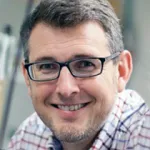
Current activities in the Hwa lab are in the area of quantitative and systemic biology. This is an emerging area of research at the interface of biology, biochemistry, engineering, and physics.
-
3 cancer stories – from colloidal drug aggregates to 3D cell culture to targeted delivery
Frontiers in Interdisciplinary Biosciences Seminar
MOLLY SHOICHET, UNIVERSITY OF TORONTO
The Shoichet lab's research program requires a cross disciplinary approach where aspects of engineering, chemistry, and biology are applied to the fields of Regenerative Medicine, Tissue Engineering and Drug Delivery. They have become very interested in drug discovery, drug screening and drug delivery in cancer.
-
Frontiers in Interdisciplinary Biosciences Pre-Seminar
FAN YANG, DEPARTMENTS OF ORTHOPAEDIC SURGERY AND OF BIOENGINEERING
Attend Dr. Yang's pre-seminar presentation to learn more about Dr. Molly Shoichet's seminar, "3 cancer stories – from colloidal drug aggregates to 3D cell culture to targeted delivery", to be held Thursday, November 3rd.
-
Fellows Symposium - October 2016
-
How Microglia Prune Synapses in Health & Disease
Frontiers in Interdisciplinary Biosciences Seminar
BETH STEVENS, BOSTON CHILDREN’S HOSPITAL AND HARVARD MEDICAL SCHOOL
One of the major unsolved mysteries in neuroscience is how synapses are eliminated in the developing and diseased brain. During development synaptic pruning is required for precise brain wiring; however the mechanisms that drive the elimination of specific synapses remain elusive. Emerging evidence implicates resident phagocytes called microglia, and molecules traditionally associated with the immune system.