
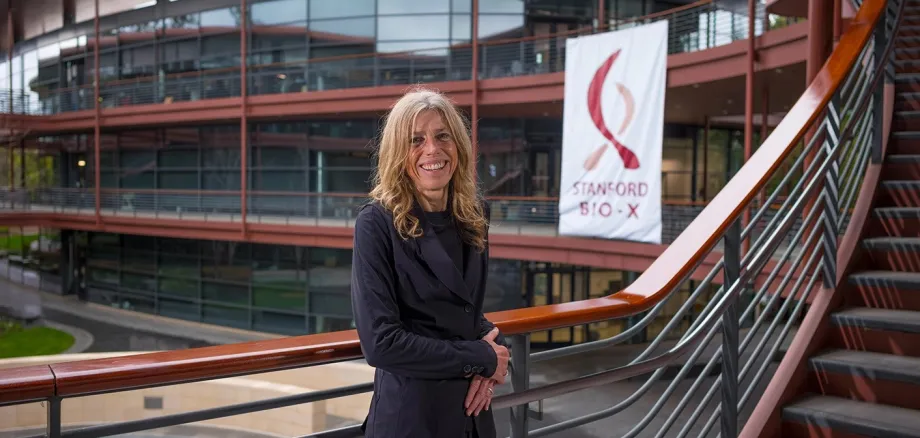
Ellen Kuhl named director of Stanford Bio-X
March 29, 2024 - Stanford News
Kuhl aims to continue Bio-X’s legacy of facilitating multidisciplinary fundamental research and innovation.
Stanford Bio-X affiliated faculty members and fellows are generating scientific advances that expand our understanding of how the body works and will ultimately improve human health. These news stories and press releases describe some of those breakthroughs.
March 29, 2024 - Stanford News
Kuhl aims to continue Bio-X’s legacy of facilitating multidisciplinary fundamental research and innovation.

March 11, 2016 - Stanford Report
The lead in Flint, Michigan's water was due to a failure of government responsibility and a lack of water systems knowledge, says Bio-X affiliate Richard Luthy, but the health crisis can provide strategies for improving the nation's water infrastructure.

March 11, 2016 - Stanford Medicine News Center
Bio-X affiliate Ami Bhatt is mobilizing Stanford experts to fight the growing threat of cancer in the developing world.
March 10, 2016 - Stanford Medicine News Center
Researchers under Bio-X affiliates Dean Felsher and Irv Weissman, including 2014 USRP participant Rachel Do, have identified a link between the expression of a cancer-related gene and cell-surface molecules that protect tumors from the immune system.
March 9, 2016 - Stanford Report
The new technology developed under Bio-X affiliate Matthew Kanan could provide a green alternative to petroleum-based plastic bottles and other polyester products.

March 4, 2016 - Stanford Report
Stanford scientists under Bio-X affiliates Dmitri Petrov, Robert Shafer, and Susan Holmes, including Bio-X Travel Award recipient Alison Feder, found that effective treatment caused the HIV virus to evolve differently than less effective treatments.

March 2, 2016 - Stanford Report
A chance observation of a water lily beetle inspired researchers under Bio-X affiliate Manu Prakash, including Travel Award recipient Haripriya Mukundarajan, to investigate the mysterious and sophisticated mode of flight it employs while flying over water.

March 2, 2016 - Stanford Medicine News Center
Researchers under Bio-X affiliates Brian Feldman and Megan Albertelli have found evidence that vitamin D suppresses the expression of a gene known to accelerate the growth of breast cancer.
February 29, 2016 - Stanford Medicine News Center
Researchers under Bio-X affiliates Cornelia Weyand and Jorg Goronzy find that excessive glucose uptake by inflammatory immune cells called macrophages may be behind coronary artery disease.

February 25, 2016 - Stanford Report
Bio-X affiliate Nick Melosh finds that heating simple metal oxides, like rust, could become the foundation for a solar technology that would make and store electricity by separating the hydrogen and oxygen atoms that make up water.
February 24, 2016 - Stanford Report
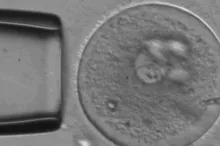
Supported by a Bio-X Seed Grant, a team under Bio-X affiliates David Camarillo and Barry Behr has found that the squishiness of an hour-old fertilized egg can predict its viability, a metric that could lead to safer, more successful IVF pregnancies.
February 17, 2016 - Stanford Report
Under Bio-X affiliate Jonathan Payne, analysis of ancient seabed rocks from disparate locations reveal that life did not rebound until anoxia had fully ebbed.

February 17, 2016 - Stanford Medicine News Center
In a recent interview, neurologist and Bio-X affiliate Frank Longo discussed Alzheimer’s disease, recent research breakthroughs and the new Stanford Neuroscience Health Center, which he co-leads.

February 17, 2016 - Stanford Medicine News Center
The findings, from Bio-X affiliates David Relman and Susan Holmes, could help scientists detect potential health problems facing marine mammals due to climate change, as well as answer a mystery about how dolphins digest whole fish.
February 16, 2016 - Stanford Medicine News Center
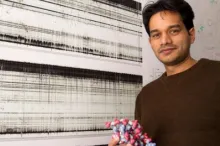
With Bio-X affiliate Rhiju Das, video-gamers have co-authored a paper describing a new set of rules for determining the difficulty of designing RNA molcecule structures.

February 12, 2016 - Stanford Report
A romantic evening of chocolate and wine would not be possible without an assist from fungi, says Bio-X affiliate Kabir Peay. In fact, truffles might be the ultimate romantic gift, as they exude pheromones that can attract female mammals.

February 11, 2016 - Stanford Report
An international team of scientists including Bio-X affiliate Robert Byer has taken another step toward understanding the birth and evolution of the universe.

February 10, 2016 - Stanford Medicine News Center
Researchers under Bio-X affiliate Matthew Bogyo have designed a compound that can target the malaria parasite without harming human tissue.
February 10, 2016 - Stanford Medicine News Center
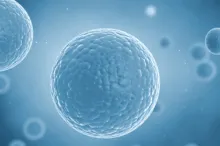
Nearly 30 years after the discovery of the hematopoietic stem cell, Stanford researchers under Bio-X affiliate Irv Weissman have found a marker that allows them to study the version of these stem cells that continues to replicate.
February 8, 2016 - Stanford Medicine Scope
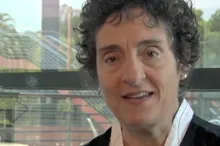
Carla Shatz, Director of Stanford Bio-X, is carrying out research that could help adults learn new skills as easily as children do. Shatz says the collaborative environment at Stanford that makes her work possible.

February 8, 2016 - PhD Comics
Can the way the brain folds determine how you think? Bio-X affiliate Ellen Kuhl explains how mechanical forces affect the wrinkles in your brain.

February 8, 2016 - Stanford Medicine Scope
Bio-X affiliate Mark Krasnow's team employed genetic, pharmacological and surgical techniques to map out a precise set of nerve circuits in the brain that are essential to the act of sighing.
February 4, 2016 - Stanford Medicine Scope
For decades, no one had a great way to examine post-transcriptional changes to RNA, much less understand what role they play in cellular processes. Bio-X affiliate Jin Billy Li’s lab is working to unravel RNA’s remaining secrets.
February 4, 2016 - Stanford Medicine News Center
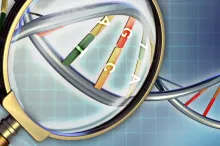
Researchers under Bio-X affiliate Gill Bejerano have found that analyzing mutations in regions of the genome that control genes can predict medical conditions such as hypertension, narcolepsy and heart problems.

February 4, 2016 - Stanford Report
Stanford researchers under Bio-X affiliate Marcus Feldman, armed with mathematical models, suggest that our higher level of cultural organization may have allowed us to eventually overwhelm the Neanderthals.

February 3, 2016 - Stanford Report
Stanford researchers under Bio-X affiliate Xiaoke Chen manipulated the brains of morphine-addicted mice and allowed them to overcome withdrawal symptoms. This could offer a new approach to quieting symptoms that often lead to recurring drug use.

February 2, 2016 - Stanford Medicine Scope
Research under Bio-X affiliate Jorg Goronzy has identified a surface protein that could explain why people's immune systems decline as they age.

February 1, 2016 - Stanford Medicine News Center
The new technique, described in a paper co-authored by Bio-X affiliate Ron Davis will allow for more comprehensive newborn screening, while also cutting the time and cost needed for testing.

February 1, 2016 - Stanford Medicine Scope
Bio-X affiliate Julia Simard has published a descriptive study to clarify the pregnancy risks for women who are diagnosed, and may be diagnosed, with lupus.

February 1, 2016 - Stanford Medicine Scope
Bio-X affiliate Hank Greely gives his take on U.K. approval to apply CRISPR on human embryos.

January 28, 2016 - Stanford Medicine Scope
A study under Bio-X affiliate Robert Shafer finds that HIV resistance to the antiviral tenofovir, one of the mainstays of HIV treatment and prevention, is increasingly common following therapy.