
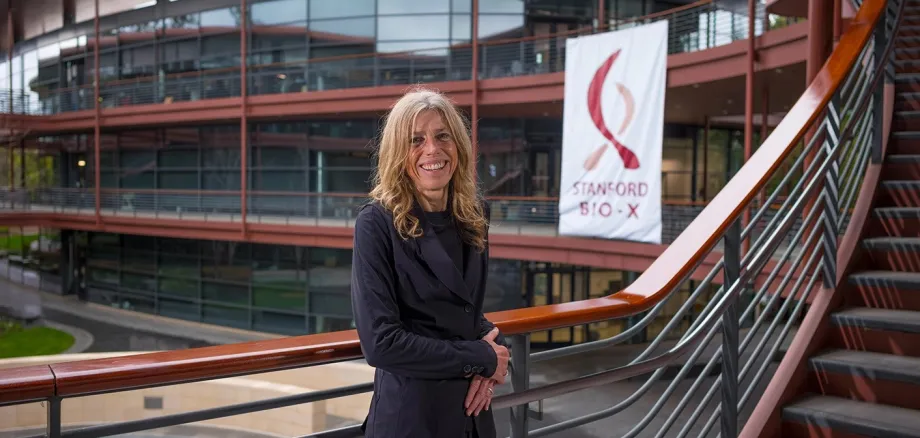
Ellen Kuhl named director of Stanford Bio-X
March 29, 2024 - Stanford News
Kuhl aims to continue Bio-X’s legacy of facilitating multidisciplinary fundamental research and innovation.
Stanford Bio-X affiliated faculty members and fellows are generating scientific advances that expand our understanding of how the body works and will ultimately improve human health. These news stories and press releases describe some of those breakthroughs.
March 29, 2024 - Stanford News
Kuhl aims to continue Bio-X’s legacy of facilitating multidisciplinary fundamental research and innovation.

January 28, 2016 - Stanford Report
By using a novel controllable adhesive system, engineers under Bio-X affiliate Mark Cutkosky shows that a person can scale a glass wall just like Spidey.

January 27, 2016
Stanford Bio-X is now accepting Letters of Intent for the 8th Round of the Stanford Bio-X IIP Seed Grants.
January 27, 2016 - Stanford Medicine News Center
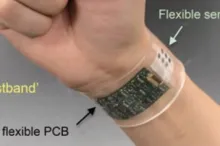
Researchers under Bio-X affiliate Ron Davis find that complementary electronic technologies underlie a newly developed, wearable sensor to monitor the body.

January 27, 2016 - Stanford Engineering
A new study under Bio-X affiliate Jelena Vuckovic shows how harnessing the quantum properties of light can create a transmission technology impervious to eavesdropping.

January 22, 2016 - Stanford Medicine News Center
After a career packed with discoveries, Bio-X affiliate Lucy Shapiro has turned her attention to the threat of emerging infectious diseases and antimicrobial resistance.
January 22, 2016 - Stanford Medicine News Center
Bio-X affiliate Irving Weissman had an unconventional start in science. The son of a hardware store operator and grandson of a fur trader, he learned lifelong lessons in research at the McLaughlin Research Institute in Montana.
January 21, 2016 - Stanford Medicine News Center
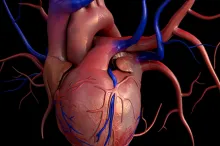
Oswaldo Jimenez's doctors, including Bio-X affiliate Jeffrey Feinstein, needed to perform what is referred to as a “bridge-to-transplant” solution, one that would sustain his organs until a transplant could be done.
January 20, 2016 - Stanford Medicine News Center
Research under Bio-X affiliates Michael Clarke and Matt van de Rijn find that a small subset of colon cancers lacks the CDX2 protein — a hallmark of colon tissue maturation.
January 13, 2016 - Stanford Medicine News Center
Bio-X affiliate Justin Sonnenburg found that when mice with gut bacteria from a human ate a low-fiber diet, the diversity of their intestinal inhabitants plummeted.

January 11, 2016 - Stanford Medicine News Center
Lloyd Minor, Dean of the School of Medicine and Bio-X Executive Committee Member, hopes leaders will set their sights higher for the health of the American people.
January 11, 2016 - Stanford Report
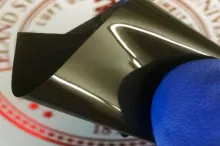
Researchers under Bio-X affiliates Zhenan Bao and Yi Cui have invented a lithium-ion battery that turns on and off depending on the temperature, which could prevent battery fires that have plagued laptops, hoverboards and other electronic devices.
January 8, 2016
The Stanford Bio-X Leadership Council is pleased to announce the 13th annual competition for Stanford Bio-X Graduate Student Fellowships.

January 7, 2016 - Stanford Report
Findings from Bio-X affiliate Brian Knutson could help understand and treat gambling or addiction disorders.
January 7, 2016 - Stanford Medicine News Center
A study under Bio-X affiliates David Kingsley and Gill Bejerano of the tiny stickleback fish led to the identification of a genomic region possibly linked to modifications in human toes and feet that enable upright walking.
January 6, 2016 - Stanford Medicine News Center
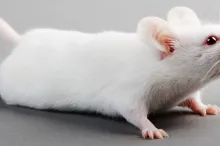
A new technique developed under Bio-X affiliated faculty Joseph Garner helps preserve valuable research mice from a condition that is the most common, preventable reason for euthanasia.
January 5, 2016 - Stanford Report
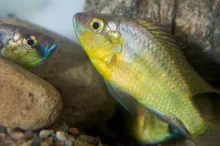
Scientists under Bio-X affiliate Russell Fernald show how the selective expression of genes through epigenetics can regulate the social status of African cichlid fish.
December 23, 2015 - Stanford Report
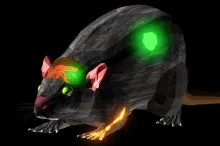
Researchers under Bio-X affiliates Hongjie Dai and Zhen Cheng, including 2013 Mona M. Burgess SIGF and Stanford Bio-X Fellow Bo Zhang, invented a long wavelength near-infrared fluorescent molecule to improve the imaging depth of glowing dyes.
December 18, 2015 - Stanford Medicine News Center
A study by Bio-X affiliates Gary Steinberg, John Huguenard, and Stephen Smith shows that Zolpidem (trade name Ambien) increased the rate at which mice that had strokes recovered their pre-stroke sensory acuity and motor coordination.
December 17, 2015 - Stanford Report
The United States needs better oversight of risky biological research, according to Stanford scholars including Bio-X affiliate David Relman.
December 16, 2015 - Stanford Medicine News Center
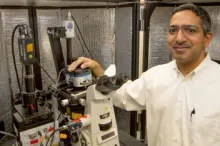
Bio-X affiliates Manish Butte and Olav Solgaard, partially supported by a Stanford Bio-X IIP Seed Grant, have developed a way to use atomic force microscopy to measure cells, which could pave the way for better understanding immune disorders and cancer.

December 16, 2015 - Stanford Report
A new microscope developed by Bio-X affiliates Scott Delp and Mark Schnitzer could provide unique insights into treating muscular degenerative diseases.

December 15, 2015 - Stanford Medicine News Center
According to research by Bio-X affiliate Vinod Menon, the neural circuits that help us pay attention and stop daydreaming exert less influence on brain activity in children with attention-deficit hyperactivity disorder than in other kids.

December 14, 2015 - Stanford Medicine News Center
Researchers under Bio-X affiliates Nigam Shah find that prescribing of opioids — such as morphine, oxycodone and hydrocodone — is widespread for the Medicare population.
December 14, 2015 - Stanford Medicine News Center
A technique developed by Bio-X affiliates Michael Snyder and Serafim Batzoglou can reveal differences in the genomes of multiple species and subspecies of microbes.

December 11, 2015 - Stanford Report
Recent research by Stanford Earth scientists under Bio-X affiliate Page Chamberlain uses new techniques to shed light on the contentious history of California's iconic mountain range.

December 10, 2015 - Stanford Medicine News Center
A study under Bio-X affiliate Jin Hyung Lee and 2012 Bio-X Bowes Fellow Andrew Weitz shows that a circuit in a brain structure called the thalamus acts like a radio, with stations at different frequencies appealing to different "listening" audiences.
December 11, 2015 - Stanford Report
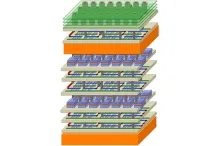
A new skyscraper-like design for processor and memory chips, designed by Bio-X affiliates Subhasish Mitra, H.-S. Philip Wong, and Kenneth Goodson and based on materials more advanced than silicon, provides the next computing platform.
December 7, 2015 - Stanford Medicine News Center
Men who are infertile have a higher risk of developing a variety of other health problems, according to a new study under Bio-X affiliated faculty members Michael Eisenberg and Mark Cullen.
December 7, 2015 - Stanford Medicine News Center
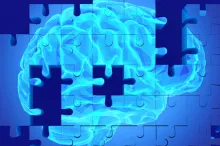
Short-circuiting the need for expensive clinical trials, researchers under Bio-X affiliates Nigam Shah and Nicholas Leeper uncovered an association between androgen blockers and cognitive decline by examining patient medical records.
December 7, 2015 - Stanford Report
A tool developed by Bio-X affiliates Jennifer Cochran and Daniel Herschlag and 2011 Bio-X Bowes Fellow Sungwon Lim facilitates testing millions of mutated proteins in a matter of hours or days, speeding the search for medicines, enzymes and biosensors.