
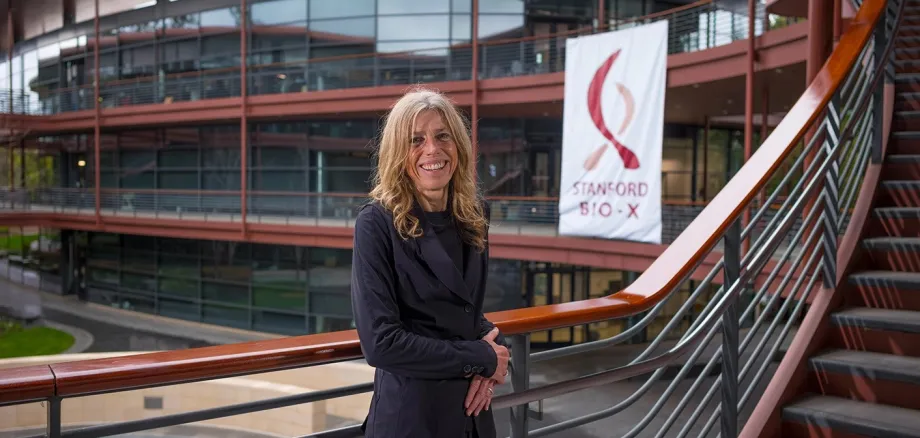
Ellen Kuhl named director of Stanford Bio-X
March 29, 2024 - Stanford News
Kuhl aims to continue Bio-X’s legacy of facilitating multidisciplinary fundamental research and innovation.
Stanford Bio-X affiliated faculty members and fellows are generating scientific advances that expand our understanding of how the body works and will ultimately improve human health. These news stories and press releases describe some of those breakthroughs.
March 29, 2024 - Stanford News
Kuhl aims to continue Bio-X’s legacy of facilitating multidisciplinary fundamental research and innovation.
October 28, 2014 - Stanford Medicine News Center
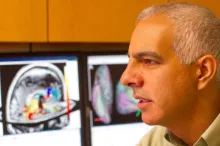
Radiology researchers under Bio-X affiliated faculty members Michael Zeineh and Allan Reiss have discovered that the brains of patients with chronic fatigue syndrome have diminished white matter and white matter abnormalities in the right hemisphere.
October 27, 2014 - Stanford Medicine News Center
A new study under Bio-X affiliated faculty member Antonio Hardan has found that parents who learned an autism therapy in group classes helped their children with the disorder improve their language skills.
October 16, 2014 - Stanford Medicine News Center
Stem cells stay developmentally nimble by actively targeting key RNA messages for destruction. Bio-X affiliated faculty members Howard Chang and Marius Wernig say this 'anti-epigenetics' works to ensure the transience of genetic information.
October 15, 2014 - Stanford Report
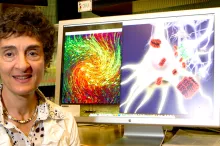
A team of scientists under Dr. Carla Shatz, the director of Stanford Bio-X, has restored the ability of adult mice to form new connections in the brain. If the finding works in people, it has the potential to help adults recover from stroke and forms of blindness or to prevent the loss of connections in Alzheimer's disease.
October 15, 2014 - Stanford Report
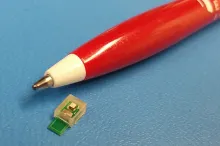
Using ultrasound to deliver power wirelessly, Bio-X affiliated faculty Amin Arbabian and Butrus Khuri-Yakub are working on a new generation of medical devices that would be planted in the body to monitor illness, deliver therapies and relieve pain.
October 13, 2014 - Stanford Report
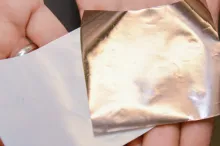
Bio-X affiliated faculty member Yi Cui and colleagues have created a lithium-ion battery that alerts users of potential overheating and fire.

October 9, 2014 - Inside Stanford Medicine
Two new Stanford-based centers led by Bio-X affiliated faculty members Mark Musen and Scott Delp aim to help scientists manage and use large, complex data sets.
October 8, 2014 - Stanford Report
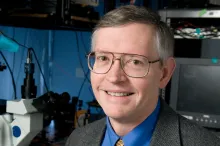
Bio-X affiliated faculty W.E. Moerner wins the Nobel Prize in Chemistry for his work on optical microscopes.
October 7, 2014 - Stanford Report
With funding from Bio-X through our 7th round of Interdisciplinary Initiatives Program Seed Grants, Stanford Bio-X affiliated faculty members Ada Poon, Scott Delp, and David Clark are creating a small wireless device that will improve studies of chronic pain.
October 6, 2014 - Inside Stanford Medicine
The NIH has announced that Bio-X affiliated faculty member Sean Wu will receive a Pioneer Award, and Bio-X affiliated faculty member Michael Bassik will receive a New Innovator Award.
October 2, 2014 - Stanford Dish
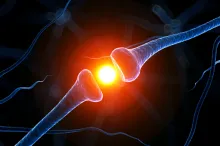
The NIH's BRAIN Initiative awards $1 million to Bio-X affiliated faculty Mark Schnitzer and Michael Lin.
September 24, 2014 - Stanford Medicine News Center
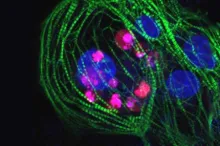
Bio-X affiliates Joseph Wu and Daria Mochly-Rosen studied heart muscle cells from stem cells to find why a genetic mutation leads to an increased risk of heart disease.
September 22, 2014 - Stanford Report
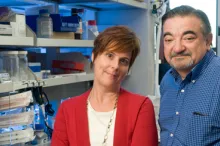
With funding from a Bio-X IIP Seed Grant, Bio-X affiliate Jennifer Cochran and Dr. Amato Giaccia and Bio-X Fellow Mihalis Kariolis have found that experimental therapy stopped the metastasis of cancers in mice, pointing toward an alternative to chemo.
September 22, 2014 - Inside Stanford Medicine
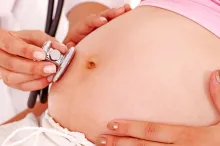
Research by Bio-X affiliated faculty Catherine Blish, Mark Davis, and Susan Holmes indicates that immune cells from pregnant women are strongly activated by influenza, which may explain the increased risk of flu complications in pregnancy.
September 22, 2014 - Stanford Report
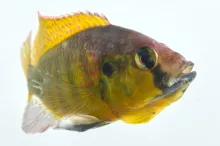
By analyzing the genomes of African cichlid fish, Bio-X affiliated faculty Russell Fernald has provided insight into the genetic mechanisms that drive species diversification.
September 17, 2014 - Stanford Report
With funding from a Bio-X IIP Seed Grant, Bio-X affiliates Sarah Heilshorn, Giles Plant, and Andy Spakowitz are developing a gel to protect cells from the trauma of injection.
September 17, 2014 - Stanford Report
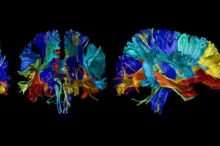
Stanford scientists under Bio-X affiliate Brian Wandell have shown how the brain changes throughout life, and created a standard curve that can be used to assess whether patients are maturing and aging normally.
September 16, 2014 - Stanford Report
Bio-X affiliate Christina Smolke introduces a computer model that could provide better blueprints for building synthetic genetic tools.
September 11, 2014 - Inside Stanford Medicine
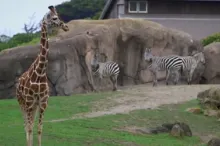
In a class with Bio-X affiliate Joseph Garner, a dozen Stanford sophomores have designed ways to enrich the lives of the giraffe, lions and kinkajou at the San Francisco Zoo.

September 11, 2014 - Inside Stanford Medicine
Bio-X Affiliate William Weis, PhD, an expert on X-ray crystallography, will now chair a department that includes two Nobel laureates.
September 10, 2014 - Inside Stanford Medicine
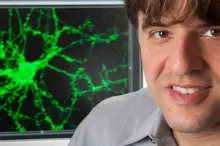
Bio-X supported faculty affiliate Karl Deisseroth in developing the technique of optogenetics, which uses light to control the activity of the brain, and which has won him the 2014 Keio Prize in Medicine.
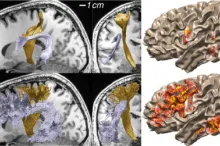
September 10, 2014 - Stanford Report
Roughly 100 trillion connections between neurons make it possible for the brain to function. Bio-X affiliate Brian Wandell's group has devised a technique for mapping these connections with greater accuracy than ever before.
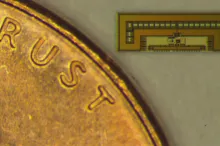
September 9, 2014 - Stanford Report
A collaborative research team led by Bio-X affiliate Amin Arbabian develops tiny radios-on-a-chip designed to serve as controllers or sensors for the 'Internet of Things.'
September 7, 2014 - Inside Stanford Medicine
Researchers under Bio-X affiliates Paul Khavari and Aaron Straight have identified a previously unknown oncogene that drives the development of a common human skin cancer in response to exposure to sunlight.
September 3, 2014 - The Scientist
The Celebrating Women in Science Series conducted an interview with Carla Shatz, David Starr Jordan Director of Stanford Bio-X.
September 3, 2014 - Stanford Report
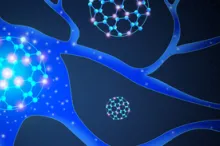
A Stanford Bio-X team under Bio-X affiliates Karl Deisseroth and John Huguenard, with Bio-X Bowes Fellow Joanna Mattis and Undergraduate Summer Research Program participant Minsuk Hyun, found that the brain's wiring is more complex than expected.
August 27, 2014 - Stanford Medicine News Center
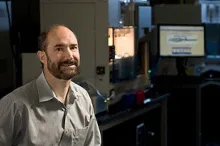
Bio-X affiliates Michael Snyder and Anshul Kundaje's attempt to identify how genes are regulated among humans, flies and worms finds significant similarities and differences.
August 27, 2014 - Inside Stanford Medicine
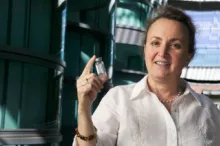
Researchers under Bio-X affiliate Daria Mochly-Rosen have discovered that a compound they developed could potentially serve as a painkiller, with particular utility for East Asians with an alcohol-metabolizing enzyme mutation.

August 25, 2014 - Stanford Report
A tiny eye implant developed by Bio-X affiliate Stephen Quake's lab could pair with a smartphone to improve the way doctors measure and lower a patient's eye pressure.

August 24, 2014 - Stanford Report
Under Bio-X affiliate Christina Smolke, a decade-long effort in genetic engineering is close to creating yeast that makes palliative medicines in stainless steel vats.