
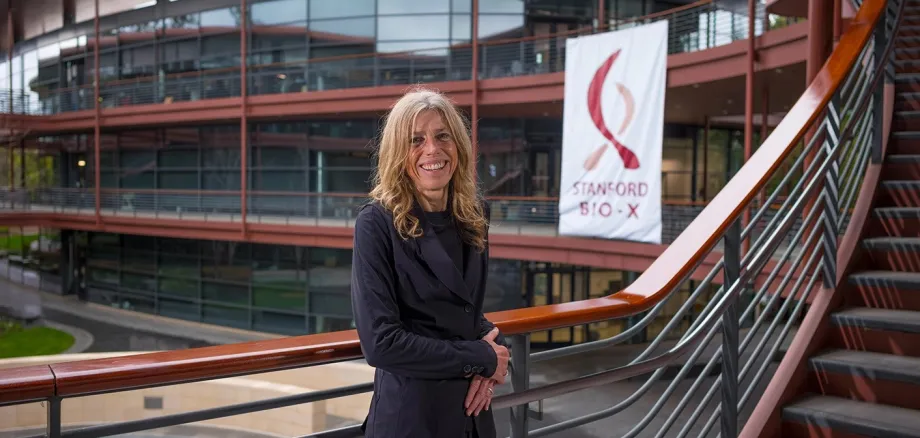
Ellen Kuhl named director of Stanford Bio-X
March 29, 2024 - Stanford News
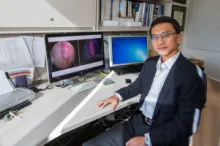
Kuhl aims to continue Bio-X’s legacy of facilitating multidisciplinary fundamental research and innovation.
Stanford Bio-X affiliated faculty members and fellows are generating scientific advances that expand our understanding of how the body works and will ultimately improve human health. These news stories and press releases describe some of those breakthroughs.
March 29, 2024 - Stanford News
Kuhl aims to continue Bio-X’s legacy of facilitating multidisciplinary fundamental research and innovation.
January 15, 2015 - Stanford Medicine News Center
Gene-sequencing technologies have focused immunologists’ attention on the role of genes in diseases, but research by Bio-X affiliated faculty members Mark Davis, Atul Butte, and Holden Maecker suggest that the environment is an even greater factor.
January 14, 2015
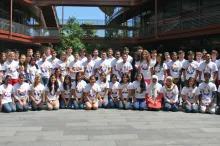
The Bio-X Program would like to announce the 10th call for applications for the Undergraduate Summer Research Program with funding available starting in the summer of 2015.
January 12, 2015 - Stanford Report
Bio-X affiliated faculty member Vijay Pande has partnered with Sony to bring his Folding@home project to smartphones, which could provide insight into diseases.
January 12, 2015 - Stanford Medicine Scope
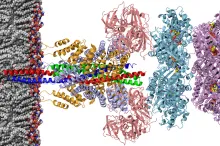
Bio-X affiliated faculty and Clark Center faculty member Axel Brunger and a team of several Stanford colleagues and UCSF scientists have moved neuroscience a step forward with a close-up inspection of a brain-wide nano-recycling operation.
January 9, 2015
The Stanford Bio-X Leadership Council is pleased to announce the 12th annual competition for Stanford Bio-X Graduate Student Fellowships
January 6, 2015 - Stanford Report
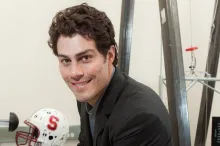
Bio-X affiliated faculty member, 2004 Bio-X Bowes Fellow, and 2012 IIP Seed Grant awardee David Camarillo and 2013 Bio-X Honorary Fellow Fidel Hernandez have measured the forces imparted on the brain in greater detail than ever before.
January 2, 2015 - Stanford Medicine News Center
Under Bio-X affiliated faculty members Anthony Ricci, Alan Cheng, Daria Mochly-Rosen, and Michael Hsieh, a study in mice has found that a commonly used antibiotic can be modified to eliminate the risk that it will cause hearing loss.
December 30, 2014 - Stanford Medicine News Center
Some cases of autism may be caused by a dysfunctional corpus callosum, resulting in poor communication between brain hemispheres, a new study suggests.
December 22, 2014 - Stanford Medicine News Center
Researchers under Bio-X affiliated faculty member Geoffrey Gurtner knew that a drug administered to remove iron from the blood could also overcome diabetic interference with blood vessel formation, but finding the right way to deliver it was the challenge.
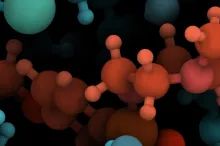
December 19, 2014 - Stanford Report
Research by Bio-X affiliated faculty member Steven Boxer and 2012 Bio-X SIGF Fellow Stephen Fried, has found that the electrostatic field within an enzyme accounts for the lion's share of its success.
December 17, 2014 - Stanford Medicine News Center
In a mouse model of Duchenne muscular dystrophy, muscle stem cells express connective-tissue genes associated with fibrosis and muscle weakness, according to a new study under Bio-X affiliated faculty member Thomas Rando.
December 10, 2014 - Stanford Medicine News Center
A new study, under Bio-X affiliated faculty members Michael Eisenberg, Mark Cullen, and Barry Behr, of men who were evaluated for the cause of their infertility finds relationships between deficiencies in their semen and other health problems.
December 2, 2014 - Stanford Report
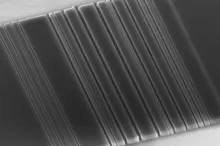
Using a new algorithm, engineers under Bio-X affiliated faculty Jelena Vuckovic can design and build a prism-like silicon structure that can bend light at right angles.
November 26, 2014 - Stanford Medicine News Center
The discovery of a new mechanism of DNA damage under Bio-X affiliated faculty Karlene Cimprich could offer insights into cancer and neurodegenerative disease.
November 26, 2014 - Stanford Medicine News Center
Researchers under Bio-X affiliated faculty members Anthony Oro, Marius Wernig, and Mark Kay were able to correct a collagen defect — the source of a blistering skin disease — in stem cells made from patients.
November 25, 2014 - Stanford Report
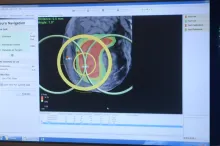
A team under Bio-X affiliated faculty Amit Etkin and Stephen Baccus has convened to map the origins of mental illnesses in the brain and develop noninvasive treatments.
November 21, 2014 - Stanford Report
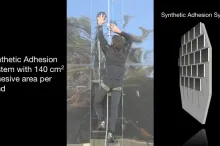
Stanford engineers under Bio-X affiliated faculty member Mark Cutkosky have designed a controllable adhesive system that can stick to glass and support a person's weight.
November 20, 2014 - Stanford Medicine News Center
Stanford researchers including Bio-X affiliated faculty Irving Weissman find that genetic differences in mitochondria contained in egg cells used in a process known as nuclear transfer can prompt rejection by the immune system in mice.
November 20, 2014 - Stanford Report
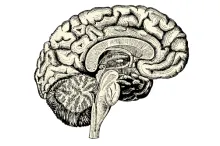
A team under Bio-X affiliated faculty Brian Wandell and Kalanit Grill-Spector, including Bio-X Travel Awardee Jason Yeatman, rediscovered a disputed brain pathway in the basement of Lane Medical Library.
November 19, 2014 - Stanford Medicine News Center
Research by Bio-X affiliated faculty Michael Snyder comparing human and mouse genomes reveals both shared principles and differences in how genes are regulated.
November 18, 2014 - Stanford Report
Computers only recently began to get the software needed to discern unknown objects; now, research by Bio-X affiliated faculty Fei-Fei Li takes machine-learning to the next level with a system that can describe objects and put them into context.

November 18, 2014 - Stanford Report
Research by Bio-X affiliated faculty Fei-Fei Li has taken computer vision to the next level with a system that can describe objects and put them into context.
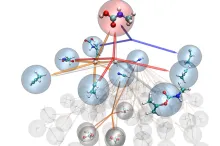
November 17, 2014 - Stanford Report
Research by Bio-X affiliated faculty members Todd Martinez and Vijay Pande involves a new computer model to identify unknown chemical mechanisms that could improve energy production and storage, or the development of new medicines.
November 17, 2014 - Stanford Medicine News Center
Bio-X affiliated faculty Euan Ashley, Vinicio de Jesus Perez, and Thomas Quertermous say that replacing the current drug used to coat artery-opening stents with a more targeted one could reduce blood clots and heart attacks.
November 13, 2014 - Stanford Medicine News Center
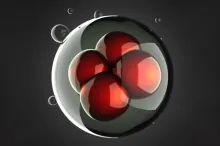
Researchers under Bio-X affiliated faculty Julien Sage, Marius Wernig, Steven Artandi, and Anne Brunet have shown that retinoblastoma protein binds to and inhibits genes necessary for stem cell pluripotency.
November 5, 2014 - Stanford Medicine News Center
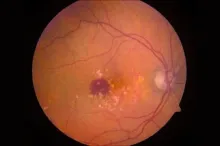
Partially supported by a Bio-X IIP Seed Grant, a new computer algorithm designed by Bio-X affiliates Daniel Rubin and Rob Tibshirani could help physicians predict whether a patient’s macular degeneration will progress within a year’s time.
November 4, 2014 - Stanford Medicine News Center
A new study partly supported by Bio-X/Bio-X NeuroVentures Program, by affiliated faculty Karen Parker, Joseph Garner, Samuel Cheshier, Sonia Partap, and Antonio Hardan and Bio-X Undergraduate Fellow Tara Trujillo, shows that oxytocin levels in blood are correlated to levels in cerebrospinal fluid.
November 3, 2014 - Stanford Report
Bio-X affiliated faculty Sindy Tang has invented a time capsule, a tiny chemistry lab designed to take a fingerprint of contamination and also disclose when it occurred.
October 29, 2014 - Stanford Medicine News Center
Researchers under Bio-X affiliates Joseph Liao, Irv Weissman, Matt van de Rijn, and Sam Gambhir have developed a new imaging method that targets a protein known as CD47 in human bladder cancer.
October 29, 2014 - Stanford Medicine News Center
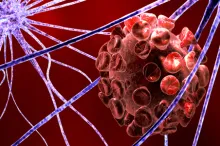
A technique developed under Bio-X affiliated faculty members Mark Kay and Matthew Porteus could provide an improved method of replacing faulty, disease-causing genes.