
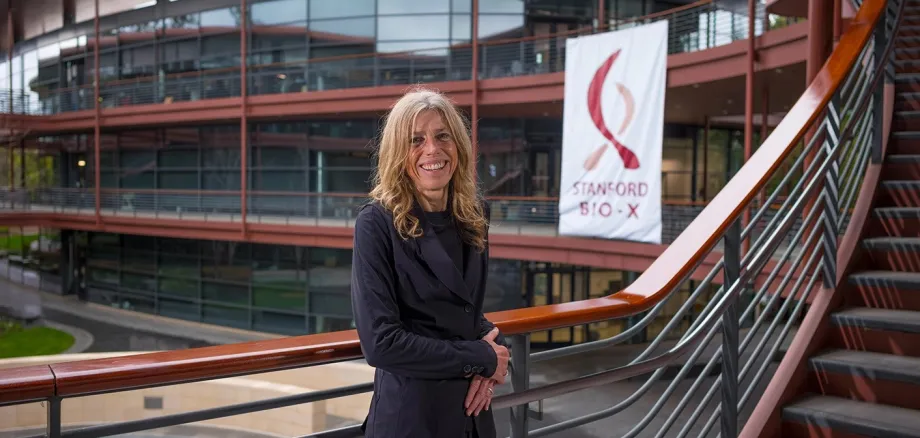
Ellen Kuhl named director of Stanford Bio-X
March 29, 2024 - Stanford News
Kuhl aims to continue Bio-X’s legacy of facilitating multidisciplinary fundamental research and innovation.
Stanford Bio-X affiliated faculty members and fellows are generating scientific advances that expand our understanding of how the body works and will ultimately improve human health. These news stories and press releases describe some of those breakthroughs.
March 29, 2024 - Stanford News
Kuhl aims to continue Bio-X’s legacy of facilitating multidisciplinary fundamental research and innovation.
June 23, 2015 - Stanford Report
Stanford scientists under Bio-X affiliated faculty member Yi Cui have developed a cheap and efficient way to extract clean-burning hydrogen fuel from water perpetually.
June 22, 2015 - Stanford Report
A team under Bio-X affiliated faculty member Mark Schnitzer applied microscopy to a neuroscience theory: synapses storing memories should last as long as the memories.
June 18, 2015 - Stanford Medicine News Center
The beta adrenergic pathway is dysfunctional in dilated cardiomyopathy. Now, researchers under Bio-X affiliated faculty member Joseph Wu have learned how a mutation that causes the disease affects the pathway, and how to mitigate its effects.

June 18, 2015 - Stanford Medicine News Center
The 8,500-year-old skeleton has been the subject of a dispute. Genetic analyses under Bio-X affiliated faculty member Carlos Bustamante suggest he is an ancestor of present-day Native Americans.

June 15, 2015 - Stanford Medicine News Center
Two genes that defend against many viral infections are nonfunctional in toothed whales, a new study under Bio-X faculty affiliate Gill Bejerano asserts.

June 15, 2015 - Stanford Medicine News Center
Faculty, staff, residents and a student were honored for a variety of contributions to Stanford Medicine at the medical school’s 2015 commencement.
June 11, 2015
Bio-X affiliated faculty member and 2008 Bio-X Skippy Frank Fellow Adam de la Zerda has been selected for a four-year period of scholarship.
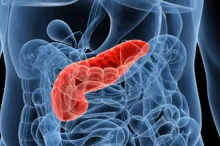
June 11, 2015 - Stanford Medicine News Center
New research under Bio-X affiliated faculty member Aida Habtezion could lead to pharmacological treatments for chronic pancreatitis, a severe and currently untreatable disease.
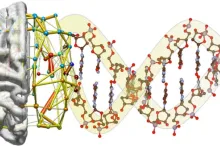
June 11, 2015 - Stanford Medicine News Center
Under Bio-X affiliated faculty Michael Greicius, the view that discrete brain regions act in synchrony has been confirmed by a study showing coordination at the genetic level.
June 11, 2015 - Stanford Medicine News Center
Researchers under Stefan Heller identified patterns of gene expression that may determine whether the ear’s inner pillar cells can give rise to new hair cells, which are key to hearing.
June 10, 2015 - Stanford Medicine News Center
A data-mining study from Bio-X affiliated faculty member Nigam Shah and emeritus faculty John Cooke has found an association between the use of proton-pump inhibitors and the likelihood of incurring a heart attack down the road.
June 8, 2015 - Stanford Report
Bio-X affiliated faculty Manu Prakash and Travel Awardee Georgios Katsikis have developed a synchronous computer that operates using moving water droplets.
June 3, 2015 - Stanford Report
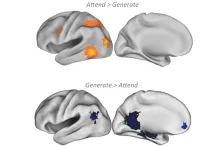
Bio-X affiliated faculty member Anthony Wagner and other scientists at Stanford have shown that, with a little bit of concentration, people can easily hide their memories from real-time brain scans with a machine-learning algorithm.
June 2, 2015 - Stanford Medicine News Center
Stanford Bio-X Director Carla Shatz has uncovered mechanisms that the brain uses to select which connections to strengthen or prune back as brain circuits form.

May 29, 2015 - Stanford Report
Stanford scientists under Bio-X affiliated faculty members Zhenan Bao and Yi Cui have created a new carbon material that significantly improves the performance of batteries and supercapacitors.
May 28, 2015 - Stanford Report
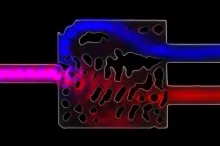
Researchers under Bio-X affiliated faculty member Jelena Vuckovic find that light can transmit more data while consuming far less power than electricity, and an engineering feat brings optical data transport closer to replacing wires.
May 28, 2015 - Stanford Medicine News Center
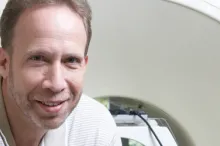
A new study under Bio-X affiliated faculty member Allan Reiss is the first to directly implicate the cerebellum in the creative process.

May 28, 2015 - Stanford Medicine News Center
A team under Bio-X affiliated faculty member Peter Parham finds that part of a gene variant present in some wild African chimps is nearly identical to an analogous gene version found in HIV-infected humans who are slow to progress to full-blown AIDS.
May 27, 2015 - Stanford Report
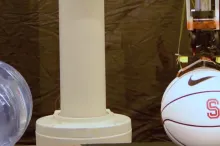
Researchers under Bio-X affiliated faculty member Mark Cutkosky have developed a material inspired by geckos', allowing robotic hands to grip nearly any object.
May 25, 2015 - Stanford Medicine News Center
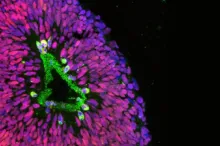
Researchers under Bio-X affiliated faculty members Sergiu Pasca, Ben Barres, and John Huguenard, including Bio-X Bowes Fellow Steven Sloan, have figured out how to create spheres of neuronal cells resembling the cerebral cortex.
May 25, 2015 - Stanford Report
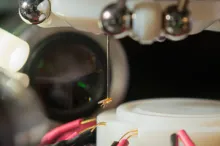
A team of scientists under Bio-X affiliated faculty member Mark Schnitzer has created a robot that expands the scope of biomedical research that can be carried out with a common laboratory organism – fruit flies.

May 22, 2015 - Stanford Report
PhD student Anne Sanquini's work and the research of Bio-X affiliated faculty member Simon Klemperer studies how to motivate people to take precautionary action to protect their homes and schools against earthquakes.

May 19, 2015 - Stanford Medicine News Center
Bio-X affiliated faculty members Mark Davis, Stephen Quake, and Darrell Wilson find that though self-targeting immune cells remain prolific in adults’ bloodstreams, some kind of internal brake seems to prevent them from triggering autoimmune disease.
May 18, 2015 - Stanford Report
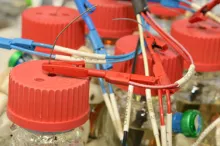
New findings by Bio-X affiliated faculty member Alfred Spormann could pave the way for microbial "factories" that produce renewable biofuels and chemicals.
May 11, 2015 - Stanford Medicine News Center
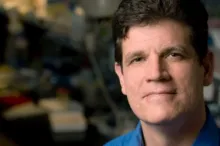
Bio-X affiliated faculty members Dean Felsher and Richard Zare find that an aggressive kidney cancer subsides in mice when the metabolism of glutamine is blocked.

May 11, 2015 - Stanford Report
Bio-X affiliated faculty member Jenna Davis finds portable dry toilet and waste service systems effective in Haiti's urban slums to help solve the problem of "flying toilets."
May 7, 2015 - Stanford Report
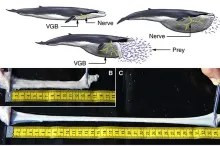
Bio-X affiliated faculty member Jeremy Goldbogen discovered that unique nerves in fin whales' mouths extend by up to 115 percent to accommodate their food.
May 6, 2015 - Stanford Medicine News Center
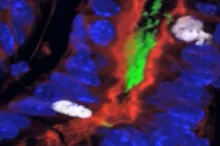
Findings from Stanford faculty including Bio-X affiliated faculty member Roeland Nusse could explain why H. pylori is a risk factor for gastric cancer.

May 5, 2015 - Stanford Report
A new algorithm developed by Bio-X affiliated faculty member Krishna Shenoy and Bio-X Travel Award recipient Matt Kaufman enables a moment-by-moment analysis of brain activity each time a lab monkey reaches this way or that during an experiment.
May 4, 2015 - Stanford Medicine News Center
A multicenter study under Bio-X affiliated faculty member Michelle Monje has identified an FDA-approved medication that prolongs survival in mice with diffuse intrinsic pontine glioma, a brain tumor that now lacks chemotherapy treatments.