Welcome to Bio-X

Welcome to Bio-X

  • Support
  • Contact
  • About
    • Bio-X History
    • Contact Us
    • Clark Center
      • Map & Directions
      • Dining Options
    • Building Services
      • Room Scheduling
      • IT
      • General Facilities Issues
      • Urgent Facilities Issues
      • Non-Emergency Facilities Requests
      • Building Access Request
      • Lab Safety
      • Shared Equipment
    • FAQ
  • People
  • Research
    • Seed Grants
      • Browse Seed Grants
    • Postdoctoral Fellows
    • PhD Fellows
    • Undergraduate Research
    • Visiting Scholars/Visiting Postdocs
    • Ventures
      • Food@Stanford
      • NeuroVentures
    • Travel Awards
    • Research Partners
    • Browse Videos
    • Browse All Research
  • Highlights
    • Videos
      • Clark Center @ 10x Video
    • Bio-X in the News
  • Videos
    • USRP Faculty Talks
    • Symposium Lectures
    • Additional Videos
  • Events
    • Upcoming Events
    • Archive
    • USRP 2020 - Investigating mechanisms of ALS genes
    • Talk Videos
  • Get Involved
    • Faculty
    • Students
      • Courses & Workshops
    • Alumni & Friends
    • Corporations
      • Partnership Models
      • Benefits of Partnership
      • Corporate Member Projects
      • Corporate Forum Newsletter Archive
    • Browse Videos
    • Seminar Series
      • Stanford Bio-X Frontiers in Interdisciplinary Biosciences: 2019/2020
    • Support Bio-X
      • Stanford Bio-X White Paper
  1. Home
  2. Events

USRP 2020 - Investigating mechanisms of ALS genes

Investigating mechanisms of ALS genes
2020 Stanford Bio-X USRP Talks - Additional Faculty Talks

Events

  • Upcoming Events
  • Archive
  • USRP 2020 - Investigating mechanisms of ALS genes
  • Talk Videos

Courses and Workshops

Headshot portrait of Aaron Gitler - Stanford Medicine Basic Science Professor

Aaron Gitler - Stanford Medicine Basic Science Professor

Bio-X Affiliated Faculty
Stanford Profile
Dr. Gitler's Lab Homepage
The Gitler lab uses the baker's yeast, Saccharomyces cerevisiae, as a model system to study the cell biology underpinning protein-misfolding diseases.

Related videos

USRP 2012 - Dissecting the genetic risk for coronary heart disease

USRP 2014 - Epidemiology/outcome research in viral hepatitis and liver cancer: what we do and how students can participate

USRP 2017 - Organization and Control of Hippocampal Networks

  • Show More

Stanford Bio-X Seed Grants

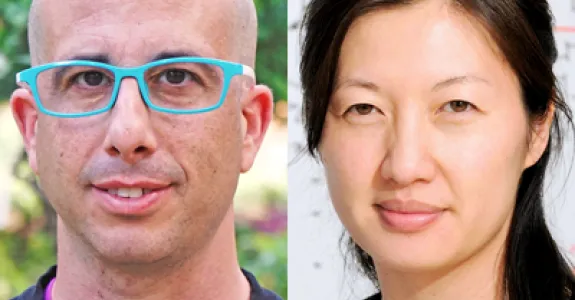
Composite image of the faculty PIs.

Interdisciplinary Initiatives Program Seed Grant: RPEX: RNA-Centered Proximity Labeling Technology for the Discovery of Cryptic Splicing Regulators in ALS and FTD

Interdisciplinary Initiatives Program Round 13 - 2026
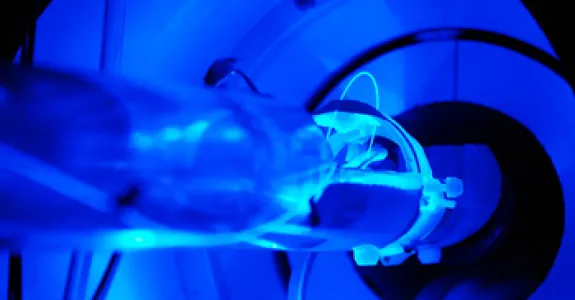
Innovating High-Resolution Novel Imaging Approaches to Elucidate Mechanisms of Prion-Like Spreading of Neurodegenerative Disease

Interdisciplinary Initiatives Program Round 7 - 2014

Research News
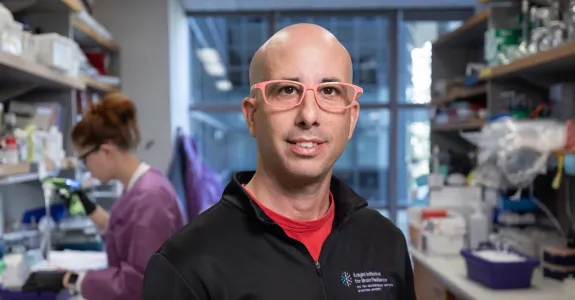
Indoor photo of male faculty member, Aaron Gitler, standing in the lab and smiling at the camera.

Exploring the cellular mystery behind ALS

October 20th, 2026 - Stanford Report News
Why ALS damages some nerve cells that control muscle movement but spares others remains unclear. Stanford...
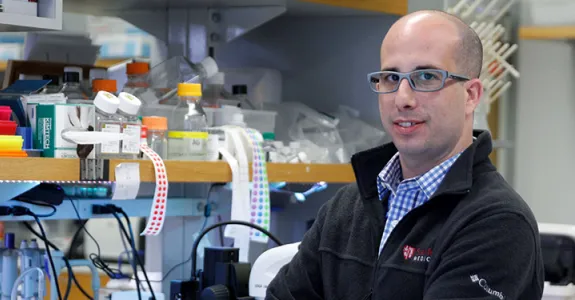
Photo of Dr. Aaron Gitler in the lab.

Suppressing single protein extends life span of mice with ALS-like disease

April 12, 2017 - Stanford Medicine News Center
A set of experiments from Bio-X affiliate Aaron Gitler reveals that suppressing a protein called...

Graphic image of DNA strands.

Researchers home in on biological cause of ALS

August 26, 2015 - Stanford Medicine News Center
Research under Bio-X affiliate Aaron Gitler finds that a mutation linked to amyotrophic lateral...

Stanford Bio-X

James H. Clark Center, Stanford University 318 Campus Drive Stanford, CA 94305 contact-biox@stanford.edu
Follow @StanfordBioX

  • Contact
  • FAQ
  • Room Reservations
Stanford University
  • Stanford Home
  • Maps & Directions
  • Search Stanford
  • Emergency Info
  • Terms of Use
  • Privacy
  • Copyright
  • Trademark
  • Non-Discrimination
  • Accessibility

© Stanford University, Stanford, California 94305