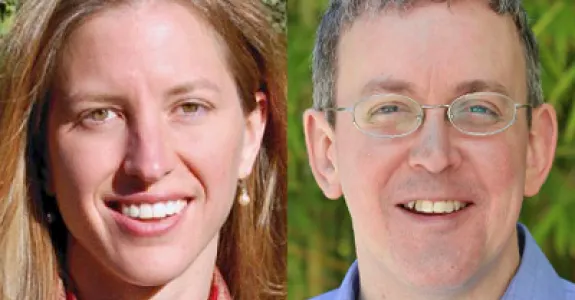

Dr. Scott Boyd is a physician scientist, Stanford Professor of Food Allergy and Immunology, Professor of Pathology and Co-Director of the Sean N. Parker Center for Allergy and Asthma Research. The Boyd laboratory uses high-throughput DNA sequencing and single-cell experiments to analyze human immune responses to infection and vaccination, as well as immunological disorders such as food allergy and immunodeficiency. Many of the laboratory’s projects analyze the immune responses of human B cells and the genetics and functional roles of antibodies in health and disease, using innovative experimental methods and data analysis approaches including machine learning.
He received bachelor's degrees in Biochemistry at the University of Manitoba, and English Literature at Oxford University, where he was a Rhodes Scholar. He obtained his M.D. from Harvard Medical School and Ph.D. from MIT, followed by pathology residency, hematopathology fellowship, and postdoctoral research work at Stanford University. He is a recipient of the Presidential Early Career Award for Scientists and Engineers, among other honors.
Dr. Boyd has consulted as an expert witness in patent disputes related to antibody technologies and antibody drugs.
The Boyd laboratory's goal is to understand the lymphocyte genotype-phenotype relationships in healthy human immunity and in immunological diseases. They apply new technologies and data analysis approaches to this challenge, particularly high-throughput DNA sequencing and single-cell monoclonal antibody generation, in parallel with functional assays. The lab's main focus has been defining clonal lineages of B cells and their antigen specificity in clinical samples from healthy individuals undergoing vaccination or responding to infection, as well as in patients with immune-mediated diseases such as food allergy. Other areas of active research are the B cell responses to HIV, immune deficiencies related to human aging, and transplant immunology.