
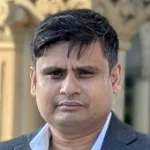
Dr. Md Tauhidul Islam is an Assistant Professor in the Department of Radiation Oncology at Stanford University. He leads a research program focused on developing advanced AI methodologies for biomedical data analysis, including medical imaging, multi-omics data integration, and human-centered machine learning frameworks for scientific discovery.
The Islam Lab develops novel AI foundations that improve performance, interpretability, and robustness in data-constrained biomedical settings. A central theme of their work is designing representations and learning frameworks that exploit latent structure in complex biomedical data, rather than relying solely on scaling dataset size or model complexity. They develop methods for spatializing and reorganizing tabular omics features into semantically meaningful image-like representations, enabling convolutional architectures to learn feature neighborhoods and interactions more effectively. In parallel, they develop multi-modal learning strategies that integrate imaging and molecular measurements to improve clinical prediction and biological insight. These frameworks are designed to be computationally efficient and scalable, supporting real-world use in settings where GPU time, labeled data, and prospective cohorts are limited.
Another major direction of the lab is trustworthy and interpretable AI for clinical translation. In medical imaging and liquid biopsy, high accuracy alone is not sufficient; models must provide reliable uncertainty estimates, interpretable feature attribution, and stability across demographic and institutional shifts. The lab therefore integrates rigorous validation, null-controlled statistical testing, and interpretable learning objectives into our pipelines. Across projects, they emphasize reproducibility and open science through the release of codebases, benchmarking datasets, and deployable toolkits that support community adoption.
The Islam lab's work is highly interdisciplinary and collaborative, integrating expertise in radiation oncology, medical physics, imaging science, genomics, and machine learning. By combining representation learning, multi-modal modeling, and clinically grounded evaluation, the Islam Lab aims to advance the scientific foundations of biomedical AI and accelerate the translation of AI technologies into patient-centered clinical impact.