
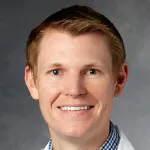
Dr. Everett Moding is a physician scientist in the Department of Radiation Oncology at Stanford University. Clinically, he focuses on the treatment of patients with sarcomas using radiation therapy, and he is engaged in prospective and retrospective clinical research. He has diverse research expertise in pre-clinical models and next-generation sequencing based approaches to analyze human samples. He has used genetically engineered mouse models to study radiation biology and the contribution of the tumor microenvironment to cancer development and response to therapy. In addition, he has applied tumor genomics, transcriptomics, and circulating tumor DNA analysis to enable personalization of radiation therapy and other treatments in human cancers.
Dr. Moding's laboratory focuses on three main areas: 1) studying the genetics underlying the response of tumors to radiation therapy, 2) developing personalized treatment approaches for sarcomas, and 3) understanding tumor clonal evolution during cancer therapy. They perform translational cancer research by analyzing human tissue and blood samples with next-generation sequencing to understand the genetic underpinnings and expression signatures that determine treatment response and resistance. The lab uses genetically engineered mouse models to validate our findings, perform mechanistic experiments, and test new therapies.