
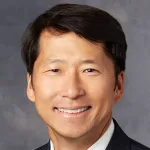
Dr. John Sunwoo was born and raised in St. Louis, Missouri. He received his undergraduate degree from Brown University in Providence, Rhode Island and his medical degree from Washington University in St. Louis, Missouri. He completed his training in Otolaryngology – Head and Neck Surgery at Washington University. Dr. Sunwoo has been at Stanford University since 2008, and his clinical focus is on the surgical management of head and neck cancer, specifically focusing on melanoma and neoplasms of the thyroid and parathyroid glands. He is a member of the Pigmented Lesions and Melanoma Clinic and the Melanoma Working Group at Stanford. He is also the co-founder of the Stanford Thyroid and Parathyroid Tumor Board.
In addition to his clinical work, Dr. Sunwoo is the Director of Head and Neck Cancer Research at Stanford University and the principal investigator of an NIH-funded laboratory in the Stanford Cancer Institute. His research is focused on three primary areas: (1) the immune response to cancer, particularly a tumorigenic population of cells within malignancies called cancer stem cells; (2) the biology and developmental programs of a special lymphocyte population involved in innate immunity called natural killer (NK) cells; and (3) intra-tumor and inter-tumor heterogeneity in head and neck cancer.
The overarching goal of the laboratory is to understand how NK cells, in the broader context of the host immune system, protect against developing and metastasizing tumor cells, especially a rare population of tumor-initiating cells called cancer stem cells. These tumorigenic cells have been isolated from a number of solid tumor malignancies, including human head and neck cancer. Heterogeneity of immune potency between individuals with these malignancies is well accepted but poorly understood. The work in Dr. Sunwoo's lab will address the questions of how and why the immune system can respond to and control malignant cells in some contexts but not in others. Clarity of the underlying basis for these differences would potentially explain why certain individuals are more susceptible to cancer, lead to better screening strategies, and ultimately provide much needed insight into how the host immune system can be manipulated to control cancer.
Despite the well-documented importance of NK cells in innate immunity, the development of this lymphocyte population is still poorly understood. In many patients afflicted with cancer, the NK cells from those individuals do not respond to typical NK cell stimuli. A more complete understanding of NK cell development may ultimately reveal potential ways by which malignancies render NK cells dysfunctional. Dr. Sunwoo's laboratory is particularly interested in understanding the transcriptional regulation of NK cell development and differentiation from stem and progenitor cells.