
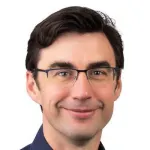
Dr. Steven Niederer is Professor of Medicine (Cardiovascular Medicine) at Stanford University. His research uses mathematical modelling, simulation and machine learning to understand how the heart works, how it changes in disease and how treatments can be tailored to individual patients. He leads the Cardiac Electro-Mechanics Research Group (CEMRG), which brings together researchers from engineering, computer science, mathematics, physiology and clinical medicine.
His group develops computational models that connect cellular and tissue physiology to the function of the whole heart. This work combines physics-based simulation, machine learning and statistical inference with clinical data, including medical imaging, ECGs and measurements from wearable and implantable sensors. Current research addresses several fundamental computational challenges: inferring physiology from incomplete measurements, quantifying uncertainty in patient-specific predictions, and making detailed simulations fast enough to study large patient populations. These methods are applied to arrhythmias, heart failure, congenital heart disease and pulmonary hypertension. The group also develops open-source software for medical imaging, simulation and data analysis.
Dr. Niederer studied engineering at the University of Auckland and completed a DPhil in Computer Science at the University of Oxford. He previously held a professorship at King's College London and Imperial College London.
The The Cardiac Electro-Mechanics Research Group (CEMRG)'s research combines computational modelling, engineering, artificial intelligence and clinical data to understand how the heart and other organs function in health and disease. They develop physics-based models and patient-specific digital twins that integrate medical imaging, physiological measurements and data from wearable and implantable sensors. Their goal is to understand the mechanisms of disease, predict how individual patients will respond to treatment and develop new approaches to personalised medicine. They are particularly interested in collaborating across engineering, biology and medicine to connect mechanisms at the cellular and tissue scales with whole-organ function and clinical outcomes.