Over 1,300 faculty are affiliated with Stanford Bio-X and are eligible to apply for our grants and be notified about fundraising opportunities, collaborations with industries, events, courses and available facilities and instruments. Learn how to become an affiliate!

Search Stanford Bio-X affiliated faculty

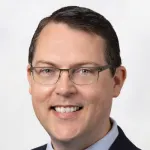
Headshot portrait of Fernando Boada - Professor of Radiology (Radiological Sciences Laboratory)

Fernando Boada - Professor of Radiology (Radiological Sciences Laboratory)

Bio-X Affiliated Faculty

Dr. Fernando Boada is a Professor of Radiology and Associate Chair for Basic Science Translational Research at Stanford University Medical School. He joined Stanford in 2021 after being Professor of Radiology, Psychiatry and Neurosurgery at New York University Medical School and the Director of the Center for Advanced Imaging Innovation and Research. Prior to joining NYU in 2012, Dr. Boada directed the MR Research Center (MRRC) at the University of Pittsburgh for ten years.

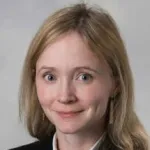
Headshot portrait of Corinne Beinat - Assistant Professor of Radiology (Molecular Imaging Program at Stanford)

Corinne Beinat - Assistant Professor of Radiology (Molecular Imaging Program at Stanford)

Bio-X Affiliated Faculty

Dr. Corinne Beinat completed her PhD in Medicinal Chemistry at the University of Sydney in 2014 focusing on the development of novel small molecule therapeutics for the treatment of neurological disease. She then completed her postdoctoral training with Dr. Sanjiv Sam Gambhir in radiochemistry and molecular imaging before joining the department as an Instructor in 2019 and then as an Assistant Professor in 2022.

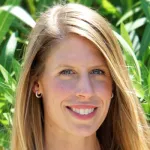
Headshot portrait of Zerina Kapetanovic - Assistant Professor of Electrical Engineering and (by courtesy) of Computer Science and of Geophysics

Zerina Kapetanovic - Assistant Professor of Electrical Engineering and (by courtesy) of Computer Science and of Geophysics

Bio-X Affiliated Faculty

Dr. Zerina Kapetanovic is an Assistant Professor in the Department of Electrical Engineering at Stanford University working in the area of low-power wireless communication, sensing, and Internet of Things (IoT) systems. Prior to starting at Stanford, Kapetanovic was a postdoctoral researcher at Microsoft Research in the Networking Research Group and Research for Industry Group.  

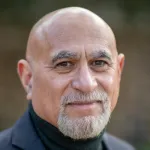
Headshot portrait of David Donoho - Anne T. & Robert M. Bass Professor in the School of Humanities & Sciences

David Donoho - Anne T. & Robert M. Bass Professor in the School of Humanities & Sciences

Bio-X Affiliated Faculty

Dr. David Donoho is a mathematician who has made fundamental contributions to theoretical and computational statistics, as well as to signal processing and harmonic analysis. His algorithms have contributed significantly to our understanding of the maximum entropy principle, of the structure of robust procedures, and of sparse data description.

Headshot portrait of Everett Moding - Assistant Professor of Radiation Oncology (Radiation Therapy)

Everett Moding - Assistant Professor of Radiation Oncology (Radiation Therapy)

Bio-X Affiliated Faculty

Dr. Everett Moding is a physician scientist in the Department of Radiation Oncology at Stanford University. Clinically, he focuses on the treatment of patients with sarcomas using radiation therapy, and he is engaged in prospective and retrospective clinical research. He has diverse research expertise in pre-clinical models and next-generation sequencing based approaches to analyze human samples. He has used genetically engineered mouse models to study radiation biology and the contribution of the tumor microenvironment to cancer development and response to therapy.

Headshot portrait of Amir Safavi-Naeini - Associate Professor of Applied Physics and (by courtesy) of Electrical Engineering

Amir Safavi-Naeini - Associate Professor of Applied Physics and (by courtesy) of Electrical Engineering

Bio-X Affiliated Faculty

Amir Safavi-Naeini is an Associate Professor of Applied Physics at Stanford University. He received his B.A.Sc. in Electrical Engineering at the University of Waterloo in Canada in 2008, and his Ph.D. in Applied Physics at the California Institute of Technology in 2013 (Painter lab). He came to Stanford in September 2014 after a post-doc at ETH Zurich in the group of Andreas Wallraff.

Headshot portrait of Anna Lembke - Professor of Psychiatry & Behavioral Sciences (General Psychiatry & Psychology - Adult)

Anna Lembke - Professor of Psychiatry & Behavioral Sciences (General Psychiatry & Psychology - Adult)

Bio-X Affiliated Faculty

Dr. Anna Lembke received her undergraduate degree in Humanities from Yale University and her medical degree from Stanford University. She is currently Professor and Medical Director of Addiction Medicine, Stanford University School of Medicine. She is also Program Director of the Stanford Addiction Medicine Fellowship, Chief of the Stanford Addiction Medicine Dual Diagnosis Clinic, and a diplomate of the American Board of Psychiatry and Neurology and the American Board of Addiction Medicine. 

Headshot portrait of George Poultsides - Stanford Department of Surgery Professor

George Poultsides - Stanford Department of Surgery Professor

Bio-X Affiliated Faculty

Dr. George Poultsides is Section Chief of Surgical Oncology and Professor of Surgery at Stanford University. He is a high-volume oncologic surgeon specializing in the management of complex cancers of the pancreas, liver, stomach and retroperitoneum. He joined Stanford in 2009 after completing fellowship training in Surgical Oncology at Memorial Sloan Kettering and in Hepato-Pancreato-Biliary (HPB) Surgery at Johns Hopkins. From a scholarly perspective, he has published extensively on the multidisciplinary management of HPB and upper GI malignancies. 

Headshot portrait of Jonathan R. Polimeni - Associate Professor of Radiology (Radiological Sciences Laboratory)

Jonathan R. Polimeni - Associate Professor of Radiology (Radiological Sciences Laboratory)

Bio-X Affiliated Faculty

Dr. Jonathan Polimeni's lab is focused on developing technologies for high-resolution functional Magnetic Resonance Imaging (fMRI) at ultra-high magnetic field strengths, and on applying these to understanding the human brain. A key goal is to improve the specificity and interpretability of human fMRI, both for inferring neuronal activity and for measuring neurovascular function in health and disease.

Pages