• Headshot portrait of Ian Wong - Bio-X Travel Awardee

    Ian Wong - Bio-X Travel Awardee

    Awarded in 2007

    Home Department: Materials Science & Engineering
    Faculty Advisor: Nicholas Melosh
    Talk Title: Dynamic Control of F-actin Polymerization Using Electrical Interfaces
    Event: 2007 American Physical Society March Meeting

  • Ibtihal Elfaki - Bio-X Travel Awardee

    Ibtihal Elfaki - Bio-X Travel Awardee

    Awarded in 2024

    Home Department: Genetics
    Faculty Advisor: Paul Khavari
    Talk Title: Investigating genotype-estrogen interactions in breast cancer through a combined molecular and epidemiological approach
    Event: American Society of Human Genetics (ASHG) 2024

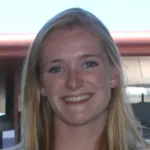
  • Photo of Stanford student and Stanford Bio-X Undergraduate Summer Research Program Participant Ilham Osman.

    Ilham Osman - Bio-X Undergraduate Fellow

    2018 Undergraduate Summer Research Program Participant and 2020 Cohort Lead
    Home Department: Human Biology
    Mentor: Shirit Einav, Medicine (Infectious Diseases) and Microbiology & Immunology
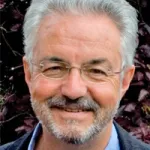
  • Headshot portrait of Imran Haque - Bio-X Travel Awardee

    Imran Haque - Bio-X Travel Awardee

    Awarded in 2010

    Home Department: Computer Science
    Faculty Advisor: Vijay Pande
    Talk Title: Lingos, GPUs, and Monitoring Vertex
    Event: 2010 CUP XI

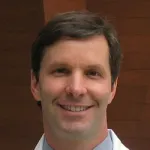
  • Headshot portrait of Inho Nam - Bio-X Travel Awardee

    Inho Nam - Bio-X Travel Awardee

    Awarded in 2018

    Home Department: Chemistry
    Faculty Advisor: Richard Zare
    Talk Title: Abiotic fabrication of sugar phosphates and ribonucleosides in water microdroplets
    Event: Biophysical Society 62nd Annual Meeting

    Supported by Mr. Matthew Frank

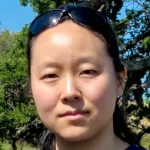
  • Photo of Dr. Inma Cobos, Assistant Professor of Pathology at Stanford University

    Inmaculada Cobos - Assistant Professor of Pathology

    Bio-X Affiliated Faculty

    Dr. Inma Cobos is a neuropathologist and neuroscientist with expertise in neurodegeneration. Her research program combines her background in diagnostic neuropathology, knowledge of developmental neuroscience, and state-of-the-art cellular and molecular technologies to advance the understanding of Alzheimer’s disease and related dementias. She is currently applying single-cell methods to human brain to dissect the contributions of distinct cell types to Alzheimer’s disease pathogenesis and investigate the mechanisms of tau-mediated neurodegeneration in human brain.

Pages