

Jeffrey Hancock - Harry & Norman Chandler Professor of Communication
Bio-X Affiliated Faculty
The Stanford Social Media Lab works on understanding psychological and interpersonal processes in social media.
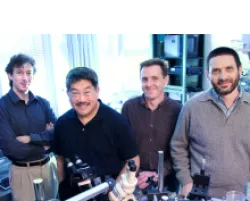
Over 1,300 faculty are affiliated with Stanford Bio-X and are eligible to apply for our grants and be notified about fundraising opportunities, collaborations with industries, events, courses and available facilities and instruments. Learn how to become an affiliate!
The Stanford Social Media Lab works on understanding psychological and interpersonal processes in social media.

Dr. Andrew J. Mannix is an assistant professor of Materials Science and Engineering at Stanford University. He completed his B.S. in Materials Science and Engineering at the University of Illinois at Urbana-Champaign, and his Ph.D. in Materials Science and Engineering at Northwestern University as an NSF GRFP Fellow, where he worked on the growth and atomic-scale characterization of new 2D materials.
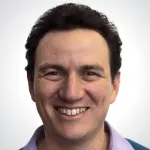
Dr. Carlos Guestrin is a Professor in the Computer Science Department at Stanford University. His previous positions include the Amazon Professor of Machine Learning at the Computer Science & Engineering Department of the University of Washington, the Finmeccanica Associate Professor at Carnegie Mellon University, and the Senior Director of Machine Learning and AI at Apple, after the acquisition of Turi, Inc. (formerly GraphLab and Dato) — Carlos co-founded Turi, which developed a platform for developers and data scientist to build and deploy intelligent applications.

Dr. Geoffrey Abrams is an Associate Professor within the Department of Orthopedic Surgery at Stanford University School of Medicine. He specializes in Sports Medicine/arthroscopy of the shoulder, knee, and elbow, upper extremity joint replacement, as well as tendon and ligament reconstructive surgery of the shoulder, knee, and elbow.

Dr. Eric Pop is a Professor of Electrical Engineering (EE) and Materials Science & Engineering (by courtesy) at Stanford, where he leads the SystemX Heterogeneous Integration focus area. Before Stanford, he spent several years on the faculty of UIUC, and in industry at Intel and IBM. His research interests are at the intersection of electronics, nanomaterials, and energy. He received his Ph.D. in EE from Stanford (2005) and three degrees from MIT (MEng and BS in EE, BS in Physics). In 2018 he was named one of the world's Highly Cited Researchers by Clarivate.

Dr. Emma Lundberg's research is focused on spatial proteomics and cell biology. At the interface between bioimaging and proteomics are fundamental aspects of human cell biology systematically assessed at a single cell level using an antibody-based approach. The aim is to understand how human proteins are distributed in time and space, how variations and deviations in localization can contribute to cell type specificity as well as disease.
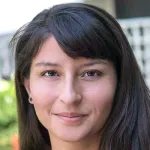
Dr. Naima Sharaf got her undergraduate degree in Chemistry at the University of North Carolina-Chapel Hill. She carried out her Ph.D. studies at the University of Pittsburgh in the lab of Dr. Angela Gronenborn where she used fluorine solution NMR to understand inhibitor-induced conformational changes with HIV-1 reverse transcriptase. To expand her structural biology skill set, she undertook postdoctoral training at Caltech in the lab of Dr.

Dr. Rogelio Hernandez-Lopez is an Assistant Professor in the Departments of Bioengineering and of Genetics, a member of Stanford Bio-X, and a Chan-Zuckerberg Biohub Investigator. Rogelio was a recipient of the Burroughs Wellcome Fund Career Award at the Scientific Interface in 2021. His laboratory works at the interface of mechanistic, synthetic and systems biology to understand and engineer biomedically relevant cellular behaviors.
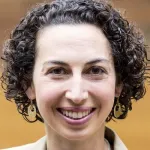
Dr. Emily Fox comes to Stanford from the University of Washington where she has held the post of Amazon Professor of Machine Learning in the Paul G. Allen School of Computer Science & Engineering and Department of Statistics. Since 2018, Emily has led the Health AI team at Apple where she is a Distinguished Engineer. Prior to joining UW, Emily was an Assistant Professor at the Wharton School Department of Statistics at the University of Pennsylvania.
Dr. Mathew Kiang is an Assistant Professor in the Department of Epidemiology and Population Health at Stanford University School of Medicine. Dr. Kiangreceived his doctorate from the Department of Social and Behavioral Sciences at Harvard TH Chan School of Public Health. Before that, he received his MPH at New York University, his BA in Sociology from San Diego State University, he was a 2016 fellow at University of Chicago’s Data Science for Social Good summer fellowship, and a Fellow at the Harvard FXB Center for Health and Human Rights.