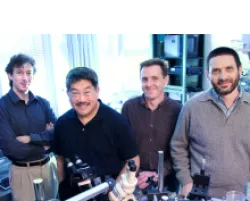
Over 1,300 faculty are affiliated with Stanford Bio-X and are eligible to apply for our grants and be notified about fundraising opportunities, collaborations with industries, events, courses and available facilities and instruments. Learn how to become an affiliate!

Search Stanford Bio-X affiliated faculty

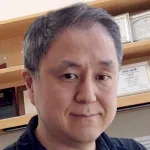
Photo of Dr. Joyce Teng, Professor of Dermatology at Stanford University.

Joyce Teng - Professor of Dermatology

Bio-X Affiliated Faculty

Dr. Joyce Teng, MD, PhD is a professor of dermatology at Stanford University. She is affiliated with multiple hospitals in the area, including Lucile Salter Packard Children's Hospital (LPCH) at Stanford and Stanford Hospital and Clinics (SHC). Dr. Teng received her medical degree from Vanderbilt University School of Medicine and has been in practice for more than 12 years. She is one of the 5 pediatric dermatologists practicing at LPCH and one of 72 at SHC who specialize in Dermatology.

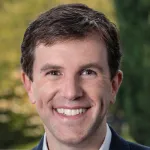
Photo of Dr. Jiajun Wu, Assistant Professor of Computer Science at Stanford University.

Jiajun Wu - Assistant Professor of Computer Science

Bio-X Affiliated Faculty

Dr. Jiajun Wu is an Assistant Professor of Computer Science at Stanford University, working on computer vision, machine learning, and computational cognitive science. Before joining Stanford, he was a Visiting Faculty Researcher at Google Research. Dr. Wu is affiliated with the Stanford Vision and Learning Lab (SVL) and the Stanford AI Lab (SAIL) and studies machine perception, reasoning, and its interaction with the physical world, drawing inspiration from human cognition.

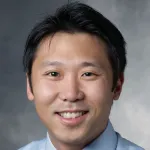
Photo of Dr. Tobias Gerstenberg, Assistant Professor of Psychology at Stanford University.

Tobias Gerstenberg - Assistant Professor of Psychology

Bio-X Affiliated Faculty

Dr. Tobias Gerstenberg leads the Causality in Cognition Lab (http://cicl.stanford.edu). The CiCL studies the role of causality in our understanding of the world, and of each other. In their research, they formalize people’s mental models as computational models that yield quantitative predictions about a wide range of situations. To test these predictions, the lab uses a combination of large-scale online experiments, interactive experiments in the lab, and eye-tracking experiments.

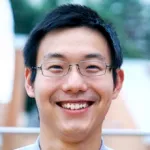
Photo of Dr. Brian Suffoletto, Associate Professor of Emergency Medicine at Stanford University.

Brian Suffoletto - Associate Professor of Emergency Medicine

Bio-X Affiliated Faculty

Dr. Brian Suffoletto is a practicing emergency physician and NIH-funded investigator with expertise in designing and testing digital behavioral interventions. After clinical training in Emergency Medicine at the University of Pittsburgh, he completed a Master's of Science with a focus on Clinical Research. In 2014, he was awarded an NIAAA Career Development Award (K23) to develop skills and knowledge on addiction treatment and behavioral interventions.

Photo of Dr. Kevin Schulman, Professor of Medicine at Stanford University.

Kevin Schulman - Professor of Medicine (Hospital Medicine) and (by courtesy) of Economics

Bio-X Affiliated Faculty

Dr. Kevin Schulman was appointed as Professor of Medicine, Associate Chair of Business Development and Strategy in the Department of Medicine, Director of Industry Partnerships and Education for the Clinical Excellence Research Center (CERC) at the Stanford University School of Medicine, and, by courtesy, Professor of Economics at Stanford’s Graduate School of Business in June, 2018. He is the Founding Faculty Director of the Master of Science in Clinical Informatics Management (MCiM) Program in the Stanford School of Medicine.

Photo of Dr. Kristan Staudenmayer, Associate Professor of Surgery (General Surgery) at Stanford University.

Kristan Staudenmayer - Associate Professor of Surgery (General Surgery)

Bio-X Affiliated Faculty

Dr. Kristan Staudenmayer received her medical degree at the University of Texas at Southwestern Medical School in 1999, and completed her residency in General Surgery at Parkland Hospital in 2006. During her post-graduate training, she conducted NIH T32-funded research at Harborview Hospital evaluating the effects of innate immunity on trauma. She obtained further training in Trauma and Surgical Critical at San Francisco General Hospital, completing her training in 2008. She was subsequently double-boarded in General Surgery and Surgical Critical Care.

Photo of Dr. Lisa Goldman Rosas,  Assistant Professor of Epidemiology and Population Health and of Medicine at Stanford University.

Lisa Goldman Rosas - Assistant Professor (Research) of Epidemiology & Population Health and of Medicine (Primary Care & Population Health)

Bio-X Affiliated Faculty

Dr. Lisa Goldman Rosas is an Assistant Professor in the Department of Epidemiology and Population Health and the Department of Medicine, Division of Primary Care and Population Health at Stanford School of Medicine. An epidemiologist by training, Dr. Goldman Rosas’ research focuses on addressing disparities in chronic diseases such as diabetes, heart disease, depression, and cancer among racial/ethnic minority families. This research features rigorous quantitative and qualitative methodologies, participatory qualitative approaches, and shared leadership with patient and community partners.

Photo of Dr. Joo Ha Hwang, Professor of Medicine (Gastroenterology & Hepatology) at Stanford University.

Joo Ha Hwang - Professor of Medicine (Gastroenterology & Hepatology)

Bio-X Affiliated Faculty

Dr. Joo Ha Hwang specializes in early detection of gastrointestinal malignancies including esophageal cancer, gastric (stomach) cancer, pancreatic cancer, bile duct cancer and colon cancer. Dr. Hwang performs advanced endoscopic procedures including EUS-FNA, ERCP and enteroscopy. In addition, Dr. Hwang also performs per-oral endoscopic myotomy (POEM), endoscopic mucosal resection (EMR) to resect large colorectal polyps, and endoscopic submucosal dissection (ESD) to resect early esophageal, gastric, and colorectal cancers.

Pages