Over 1,300 faculty are affiliated with Stanford Bio-X and are eligible to apply for our grants and be notified about fundraising opportunities, collaborations with industries, events, courses and available facilities and instruments. Learn how to become an affiliate!

Search Stanford Bio-X affiliated faculty

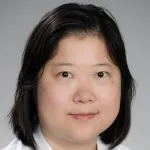
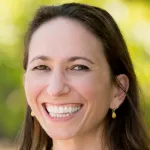
Photo of Dr. Juliet Knowles, Assistant Professor of Neurology at Stanford University.

Juliet Knowles - Assistant Professor of Neurology & Neurological Sciences and Pediatrics

Bio-X Affiliated Faculty

Dr. Juliet Knowles is Assistant Professor in Neurology at Stanford. Dr. Knowles is a physician-scientist who provides clinical care for children with epilepsy and leads a lab team conducting basic, translational and clinical research on pediatric epilepsy. She completed her M.D. and Ph.D. in Neurosciences at Stanford University, followed by residency training in Pediatrics and Child Neurology at Stanford, where she also served as Chief Resident. Following clinical fellowship training in Pediatric Epilepsy, Dr.

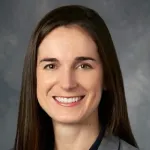
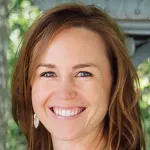
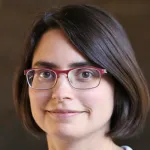
Photo of Dr. Laura Prolo, Assistant Professor of Neurosurgery at Stanford University.

Laura Prolo - Assistant Professor of Neurosurgery

Bio-X Affiliated Faculty

Dr. Laura Prolo is an Assistant Professor in the Department of Neurosurgery at Stanford University School of Medicine. After receiving her A.B. in Biology and Philosophy-Neuroscience-Psychology from Washington University in St. Louis, she completed her MD and PhD in Neuroscience from Stanford University. She remained at Stanford for Neurosurgery residency, then completed a fellowship in Pediatric Neurosurgery at University of Washington/Seattle Children’s Hospital.

Photo of Dr. Christopher Bennett, Assistant Professor of Emergency Medicine at Stanford University.

Christopher Bennett - Assistant Professor of Emergency Medicine

Bio-X Affiliated Faculty

Dr. Christopher Bennett is a physician scientist and an Assistant Professor of Emergency Medicine at Stanford University School of Medicine. Once a basic scientist focused on genetics and genomics, Dr. Bennett’s work for the last several years has focused on large data-set analyses reflective of multiple multi-institutional studies aimed at better understanding how US emergency departments (and emergency physicians) can increase rates of HIV testing for at- risk patients.

Photo of Dr. Gen Shinozaki, Associate Professor of Psychiatry & Behavioral Sciences at Stanford University.

Gen Shinozaki - Associate Professor of Psychiatry & Behavioral Sciences

Bio-X Affiliated Faculty

Dr. Gen Shinozaki's research interests include investigation epigenetics mechanism of delirium pathophysiology, neuroinflammation and aging using human and mouse samples. Dr. Shinozaki's group aims to develop epigenetic biomarkers for delirium to predict, detect and monitor illness course, treatment response and patient outcomes. They are also working on a small point-of-care EEG device to detect delirium and predict patient outcome.

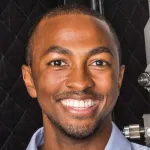
Photo of Dr. Neir Eshel, Assistant Professor of Psychiatry & Behavioral Sciences at Stanford University.

Neir Eshel - Assistant Professor of Psychiatry & Behavioral Sciences

Bio-X Affiliated Faculty

Dr. Neir Eshel (he/him/his) is a tenure-track Assistant Professor in the Department of Psychiatry & Behavioral Sciences at Stanford University School of Medicine. His clinical focus is the full-spectrum mental health care of sexual and gender minorities, with particular interest in depression, anxiety, and the complex effects of trauma in this population. He works in collaboration with other primary care and mental health providers at the new Stanford LGBTQ+ program.

Photo of Dr. Scott Owen, Assistant Professor of Neurosurgery at Stanford University.

Scott Owen - Assistant Professor of Neurosurgery

Bio-X Affiliated Faculty

Dr. Scott Owen's lab studies how neuromodulation can shape the activity of targeted cell types and circuits to guide behavior. Their goal is to understand how specialized physiology, connectivity, and cell-signaling support the diverse functions of individual neuronal cell types. How can a deeper understanding of these features guide future therapeutic interventions for neurological diseases including Autism, Obsessive-Compulsive Disorder, and Parkinson’s Disease?

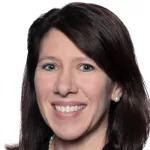
Photo of Dr. Juyong Brian Kim, Assistant Professor of Cardiovascular Medicine at Stanford University.

Juyong Brian Kim - Assistant Professor of Medicine (Cardiovascular Medicine)

Bio-X Affiliated Faculty

The lifetime risk of developing cardiovascular disease (CVD) is determined by the genetic makeup and exposure to modifiable risk factors. Dr. Juyong Brian Kim's research laboratory is interested in understanding how various environmental pollutants (eg. tobacco, e-cigarettes, air pollution and wildfire) interact with genes to affect the transcriptome, epigenome, and eventually disease phenotype of CVD. The current focus is to investigate how different toxic exposures can adversely remodel the vascular wall leading to increased cardiac events.

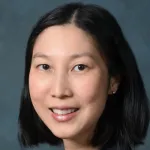
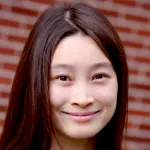
Photo of Dr. Joyce Teng, Professor of Dermatology at Stanford University.

Joyce Teng - Professor of Dermatology

Bio-X Affiliated Faculty

Dr. Joyce Teng, MD, PhD is a professor of dermatology at Stanford University. She is affiliated with multiple hospitals in the area, including Lucile Salter Packard Children's Hospital (LPCH) at Stanford and Stanford Hospital and Clinics (SHC). Dr. Teng received her medical degree from Vanderbilt University School of Medicine and has been in practice for more than 12 years. She is one of the 5 pediatric dermatologists practicing at LPCH and one of 72 at SHC who specialize in Dermatology.

Photo of Dr. Jiajun Wu, Assistant Professor of Computer Science at Stanford University.

Jiajun Wu - Assistant Professor of Computer Science

Bio-X Affiliated Faculty

Dr. Jiajun Wu is an Assistant Professor of Computer Science at Stanford University, working on computer vision, machine learning, and computational cognitive science. Before joining Stanford, he was a Visiting Faculty Researcher at Google Research. Dr. Wu is affiliated with the Stanford Vision and Learning Lab (SVL) and the Stanford AI Lab (SAIL) and studies machine perception, reasoning, and its interaction with the physical world, drawing inspiration from human cognition.

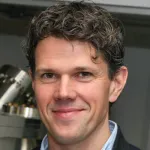
Photo of Dr. Tobias Gerstenberg, Assistant Professor of Psychology at Stanford University.

Tobias Gerstenberg - Assistant Professor of Psychology

Bio-X Affiliated Faculty

Dr. Tobias Gerstenberg leads the Causality in Cognition Lab (http://cicl.stanford.edu). The CiCL studies the role of causality in our understanding of the world, and of each other. In their research, they formalize people’s mental models as computational models that yield quantitative predictions about a wide range of situations. To test these predictions, the lab uses a combination of large-scale online experiments, interactive experiments in the lab, and eye-tracking experiments.

Pages