
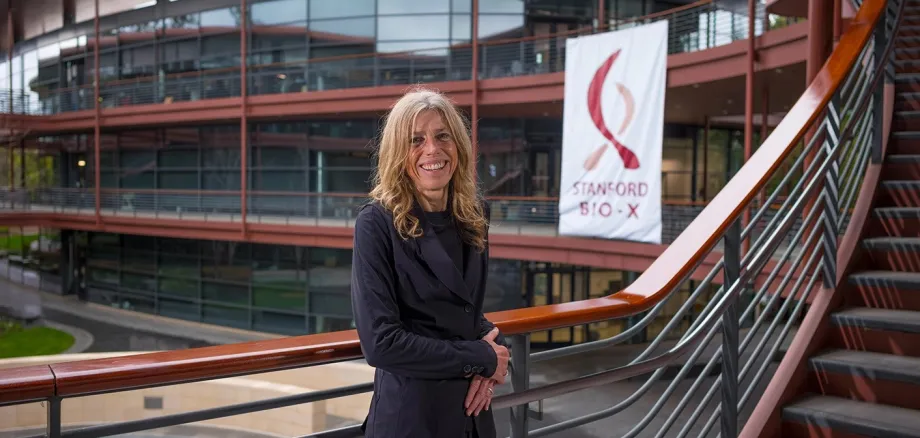
Ellen Kuhl named director of Stanford Bio-X
March 29, 2024 - Stanford News
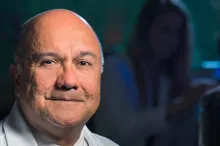
Kuhl aims to continue Bio-X’s legacy of facilitating multidisciplinary fundamental research and innovation.
Stanford Bio-X affiliated faculty members and fellows are generating scientific advances that expand our understanding of how the body works and will ultimately improve human health. These news stories and press releases describe some of those breakthroughs.
March 29, 2024 - Stanford News
Kuhl aims to continue Bio-X’s legacy of facilitating multidisciplinary fundamental research and innovation.

August 29, 2017 - Stanford Medicine News Center
Stanford Bio-X affiliated faculty members Howard Chang, Rhiju Das, and William Greenleaf have launched a new challenge on the Eterna computer game: players will design a CRISPR-controlling molecule, opening possibilities for research and therapies.
August 27, 2017 - Stanford Medicine News Center
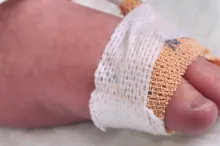
Disparities exist in how babies of different racial and ethnic origins are treated in California’s neonatal intensive care units, but this could be changed, says Stanford Bio-X affiliated faculty Henry Lee.

August 24, 2017 - Stanford Medicine News Center
Stanford Bio-X affiliated faculty Justin Sonnenburg and Josh Elias have linked a traditional population’s seasonally varying diet to cyclical changes in the number of gut-residing microbial species.
August 22, 2017 - Stanford News
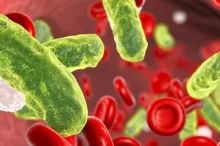
A survey from Stanford Bio-X affiliated faculty Steven Quake, Gary Shaw, and David Stevenson of DNA fragments circulating in the blood suggests the microbes living in us are more diverse than previously known: 99 percent of the DNA has never been seen.

August 22, 2017 - Stanford Medicine News Center
“Humanized” mice are used to study human immune responses, but they are inadequate for stem cell studies, says Stanford Bio-X affiliated faculty Joseph Wu. Optimized models are needed for clinical decision-making.
August, 2017 - Stanford Medicine Magazine
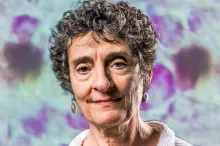
Bio-X Director Carla Shatz and her team made some of the past 40 years’ most important — and at times controversial — discoveries about brain wiring during developmentally critical periods. Driven by curiosity and a refusal to be bound by traditional thinking, Shatz has time and again found herself in uncharted and fertile territory.

August, 2017 - Stanford Medicine Magazine
Stanford Bio-X affiliated faculty members Jeffrey Goldberg, Michael Marmor, Daniel Palanker, Mark Blumenkranz, and Andrew Huberman are working to help people regain or preserve their sight, using new technology and a better understanding of the eye.

August 17, 2017 - Stanford Medicine News Center
Stanford Bio-X affiliated faculty Gill Bejerano and Stanford Bio-X Fellow Johannes Birgmeier used cryptography to cloak irrelevant information in individuals’ genomes but reveal disease-associated mutations, which could improve patient privacy.
August 17, 2017 - Stanford Medicine Scope
Stanford Bio-X affiliated faculty Michelle Monje and Peter Jackson and Stanford Bio-X Undergraduate Summer Research Program participant Dominique Cooper ask why high-grade gliomas often metastasize to a specific part of the brain.
August 16, 2017 - Stanford Medicine Scope
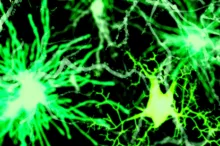
Stanford Bio-X affiliated faculty Sergiu Pasca, Ben Barres, Steve Quake, and Richard Reimer, as well as Stanford Bio-X Fellow Steven Sloan, have used a revolutionary 3-D culture technique to nurse astrocytes to maturity in laboratory glassware.

August 16, 2017 - Stanford News
Studying the brains of fish with Stanford Bio-X affiliate Russ Fernald led 2014 Stanford Bio-X Undergraduate Summer Research Program participant Danielle Katz in an unexpected direction – a degree in mechanical engineering.

August 16, 2017 - Stanford Medicine Scope
Stanford Bio-X affiliated faculty Tina Hernandez-Boussard examined the most common non-pharmaceutical pain management therapies following knee replacement surgery, finding that acupuncture and electrotherapy could reduce and delay opioid use.

August 15, 2017 - Stanford Medicine Scope
Stanford Bio-X affiliated faculty Paul Khavari, Howard Chang, Michael Snyder, Anshul Kundaje, and William Greenleaf, with Stanford Bio-X Fellow Adam Rubin, have used new mapping techniques to peer into the deepest recesses of tissue-specific stem cells.
August 14, 2017 - Stanford Medicine Scope
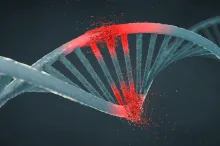
Research from Stanford Bio-X affiliated faculty Karlene Cimprich could help explain why DNA damage occurs in cancer cells.
August 9, 2017 - Stanford Medicine Scope
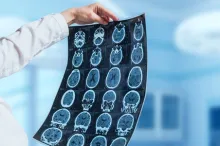
To make it easier for physicians to detect chemotherapy’s after-effects, Stanford Bio-X affiliated faculty members Heike Daldrup-Link, Michael Moseley, Phillip Yang, Kristen Yeom, and Kathleen Sakamoto tested a method to assess problems in a single scan.

August 7, 2017 - Stanford News
Stanford Bio-X affiliated faculty member Scott Delp and Stanford Bio-X Fellows Jennifer Hicks and Carmichael Ong work on models of the bone, muscles and nerves that control our bodies. A new competition is crowdsourcing the search for such tools.
August 4, 2017 - Stanford News
Stanford Bio-X affiliated faculty member Marcus Feldman is a pioneer in the field of cultural evolution and has worked on diverse topics. He discusses the importance of cultural evolution and its deep ties to biological evolution.

August 4, 2017 - Stanford News
Stanford Bio-X affiliated faculty member Richard Luthy has created a planning tool to help urban water utilities develop efficient, cost-effective ways to replenish aquifers.

August 3, 2017 - Stanford Medicine News Center
Stanford Bio-X affiliated faculty Kelly Ormond discusses a formal policy statement endorsing the idea that researchers continue editing genes in human germ cells.
August 2, 2017 - Stanford Medicine News Center
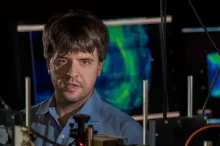
Stanford Bio-X affiliated faculty Karl Deisseroth used advanced lab technologies to show, in mice, that symptoms of autism can be countered by reducing the ratio of excitatory to inhibitory neuronal firing in the forebrain.

August 2, 2017 - Stanford Medicine Scope
The U.S. opioid epidemic is making headline news. With all the press coverage, it’s tempting to think the problem is getting the attention it needs. Stanford Bio-X affiliated faculty member Sean Mackey explains that this couldn’t be farther from the truth.
August 1, 2017 - Stanford Medicine Scope
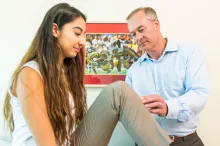
Stanford Bio-X affiliated faculty Jason Dragoo is leading a study that is examining whether stem cell therapy can improve cartilage growth and decrease inflammation caused by osteoarthritis in the knee.
August 1, 2017 - Stanford Medicine News Center
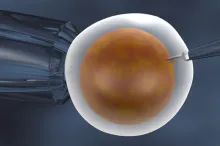
A study led Stanford Bio-X affiliated faculty Lynn Westphal and a biotechnology company found that women who have high progesterone levels when their eggs are retrieved benefit from waiting to receive embryos.
July 31, 2017 - Stanford Medicine News Center
Researchers including Stanford Bio-X affiliated faculty Mark Davis and Holden Maecker used high-throughput analysis to link inflammation to chronic fatigue syndrome.
July 27, 2017 - Stanford Medicine Scope
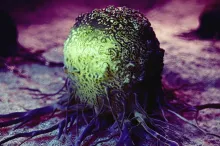
Stanford Bio-X affiliated faculty Joseph Wu, Patricia Nguyen, Irv Weissman, and Edward Graves and Stanford Bio-X Fellow Andrew Lee have found that, in mice, it’s possible to halt or reverse the growth of human teratoma cells arising from the injection of pluripotent stem cells with radiation.

July 27, 2017 - Stanford Medicine News Center
Stanford Bio-X affiliated faculty members Nirao Shah and Surya Ganguli and Stanford Bio-X Fellow Niru Maheswaranathan find that a male mouse’s susceptibility to aggression depends on whether it has been housed with other mice or in isolation.
July 26, 2017 - Stanford Medicine Scope
Stanford Bio-X affiliated faculty Ngan Huang and Trevor Hastie have devised a way to quickly assess the effect of many combinations of proteins on the differentiation of stem cells into endothelial cells to pinpoint the ones most likely to be clinically useful.
July 25, 2017 - Stanford Medicine Scope
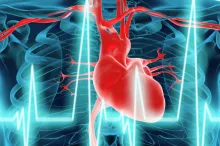
Stanford Bio-X affiliated faculty Francois Haddad, Euan Ashley, and Joseph Wu explore uses of treadmill exercise testing with heart sonograms as an improved method of determining treatment plans for patients with two types of cardiomyopathy.
July 21, 2017 - Stanford News
Stanford Bio-X affiliated faculty member Gordon Wetzstein has developed a 4D camera with an extra-wide field of view. It could improve robotic vision and augmented reality.
July 19, 2017 - Stanford News
A newly developed vine-like robot from Stanford Bio-X affiliated faculty Allison Okamura can grow across long distances without moving its whole body. It could prove useful in search and rescue operations and medical applications.