
Alison Marsden is the Douglass M. and Nola Leishman Professor of cardiovascular disease in the departments of Pediatrics, Bioengineering, and, by courtesy, Mechanical Engineering at Stanford University. From 2007-2015 she was a faculty member in the Mechanical and Aerospace Engineering Department at the University of California San Diego. She graduated with a bachelor's degree in Mechanical Engineering from Princeton University in 1998, and a PhD in Mechanical Engineering from Stanford in 2005 working with Prof. Parviz Moin. She was a postdoctoral fellow at Stanford University in Bioengineering and Pediatric Cardiology from 2005-07 working with Charles Taylor and Jeffrey Feinstein. She was the recipient of a Burroughs Wellcome Fund Career Award at the Scientific Interface in 2007, an NSF CAREER award in 2011. She is a fellow of the American Institute of Medical and Biological Engineers, the Society for Industrial and Applied Mathematics, the American Physical Society, the Biomedical Engineering Society, and the American Society of Mechanical Engineers. She received the UCSD graduate student association faculty mentor award in 2014 and MAE department teaching award at UCSD in 2015 and the Van C. Mow Medal from the ASME in 2023, and the department of Pediatrics Postdoc Mentoring Award in 2025. She has published over 200 peer reviewed journal papers, and has active funding from the NSF, NIH, and several private foundations. She serves on editorial boards of leading journals in biomechanics and computational science. Her work focuses on the development of numerical methods for cardiovascular blood flow simulation, medical device design, application of optimization to large-scale fluid mechanics simulations, and application of engineering tools to impact patient care in cardiovascular surgery and congenital heart disease.
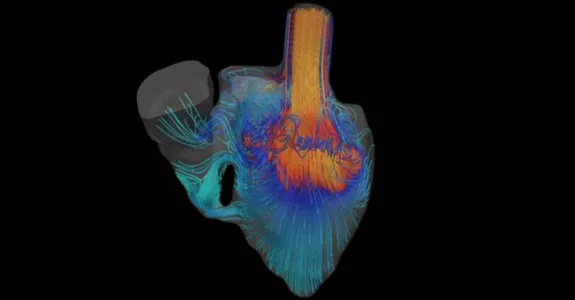
Dr. Marsden's work focuses on the development of numerical methods for cardiovascular blood flow simulation, medical device design, application of optimization to large-scale fluid mechanics simulations, and application of engineering tools to impact patient care in cardiovascular surgery and congenital heart disease. The Cardiovascular Biomechanics Computation Lab at Stanford develops novel computational methods for the study of cardiovascular disease progression, surgical methods, and medical devices. They have a particular interest in pediatric cardiology, and use virtual surgery to design novel surgical concepts for children born with heart defects.