Over 1,300 faculty are affiliated with Stanford Bio-X and are eligible to apply for our grants and be notified about fundraising opportunities, collaborations with industries, events, courses and available facilities and instruments. Learn how to become an affiliate!

Search Stanford Bio-X affiliated faculty

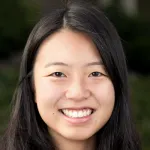
Photo of Dr. Christopher Potts, Professor of Linguistics at Stanford University.

Christopher Potts - Director of the Center for the Study of Language & Information (CSLI) and Professor of Linguistics and (by courtesy) of Computer Science

Bio-X Affiliated Faculty

Dr. Christopher Potts's group uses computational methods to explore how emotion is expressed in language and how linguistic production and interpretation are influenced by the context of utterance. This research combines methods from linguistics, cognitive psychology, and computer science, in the service of both scientific discovery and technology development. In many cases, they have taken theoretical models of language use and applied techniques from machine learning to scale those models for use on massive data sets and in complex environments.

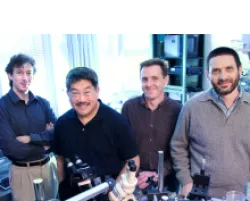
Photo of Dr. Christine Jacobs-Wagner, Professor of Biology at Stanford University.

Christine Jacobs-Wagner - Dennis Cunningham Professor and Professor of Biology

Bio-X Affiliated Faculty

Cellular replication is a defining feature of life. But how do cells reproduce themselves? Dr. Christine Jacobs-Wagner's laboratory addresses this fundamental question by probing the governing principles and the spatiotemporal mechanisms that underlie cellular replication, with an emphasis of cell morphogenesis, cell growth, chromosome dynamics and cell cycle regulation. They use bacteria as model systems for two main reasons. First, bacteria lack the complex control systems of eukaryotes (e.g., cyclin/Cdk machinery); yet their multiplication process is remarkably efficient and faithful.

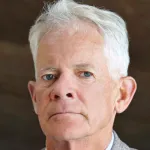
Photo of Dr. Serena Yeung, Assistant Professor of Biomedical Data Science and (by courtesy) of Computer Science and of Electrical Engineering at Stanford University.

Serena Yeung-Levy - Assistant Professor of Biomedical Data Science and (by courtesy) of Computer Science and of Electrical Engineering

Bio-X Affiliated Faculty

Dr. Serena Yeung-Levy is an Assistant Professor of Biomedical Data Science and, by courtesy, of Computer Science and of Electrical Engineering at Stanford University. Her research focus is on developing artificial intelligence and machine learning algorithms to enable new capabilities in biomedicine and healthcare. She has extensive expertise in deep learning and computer vision, and has developed computer vision algorithms for analyzing diverse types of visual data ranging from video capture of human behavior, to medical images and cell microscopy images.

Photo of Dr. Jon-Paul Pepper, Assistant Professor of Otolaryngology at Stanford University.

Jon-Paul Pepper - Assistant Professor of Otolaryngology (Facial Plastic and Reconstructive Surgery)

Bio-X Affiliated Faculty

Facial paralysis is a debilitating condition that affects thousands of people.  The loss of movement on one side of the face can distort the appearance of one’s face during emotional expression, impact speech, the ability to eat and drink normally, and the health of one’s eye. When appropriate, surgery can help to rehabilitate a patient with facial paralysis. Despite excellent surgical technique, we are currently limited by the regenerative capacity of the body and perfect symmetry is impossible to restore.

Photo of Dr. Monroe Kennedy, Assistant Professor of Mechanical Engineering at Stanford University.

Monroe Kennedy III - Assistant Professor of Mechanical Engineering

Bio-X Affiliated Faculty

Dr. Monroe Kennedy's research is to develop technology that improves everyday life by anticipating and acting on the needs of human counterparts. The research can be divided into the following sub-categories: robotic assistants, connected devices and intelligent wearables. Dr. Kennedy uses a combination of tools in dynamical systems analysis, control theory (classical, non-linear and robust control), state estimation and prediction, motion planning, vision for robotic autonomy and machine learning.

Headshot photo of Dr. Karthik Balakrishnan, Associate Professor of Otolaryngology at Stanford University

Karthik Balakrishnan - Associate Professor of Otolaryngology (Head & Neck Surgery)

Bio-X Affiliated Faculty

Dr. Karthik Balakrishnan studies ways to improve outcomes of pediatric airway reconstruction for diseases such as laryngotracheal, subglottic and tracheal stenosis, congenital tracheal stenosis and complete tracheal rings, laryngeal clefts, and vocal fold immobility and paralysis. He also examines the same questions for vascular malformations such as lymphatic malformations, venous malformations and hemangiomas.

Headshot photo of Dr. Feliks Kogan, Assistant Professor (Research) of Radiology (Musculoskeletal Imaging) at Stanford University

Feliks Kogan - Assistant Professor (Research) of Radiology (Musculoskeletal Imaging)

Bio-X Affiliated Faculty

Dr. Feliks Kogan's research is focused on the development and clinical translation of novel quantitative and molecularly specific imaging technologies geared toward detection of disease at the earliest causative stages. Specifically, he is motivated to study the causes and treatment of osteoarthritis (OA) and other musculoskeletal disorders, which have a large physical and financial impact but remain poorly understood. Research projects include development of:

Photo of Dr. Nicholas Haber,  Assistant Professor of Education at Stanford University

Nicholas Haber - Assistant Professor of Education

Bio-X Affiliated Faculty

Dr. Nicholas Haber uses AI models of of exploratory and social learning in order to better understand early human learning and development, and conversely, he uses our understanding of early human learning to make robust AI models that learn in exploratory and social ways. Based on this, Dr. Haber develops AI-powered learning tools for children, geared in particular towards the education of those with developmental issues such as the Autism Spectrum Disorder and Attention Deficit Hyperactivity Disorder, in the mold of his work on the Autism Glass Project. Dr.

Pages